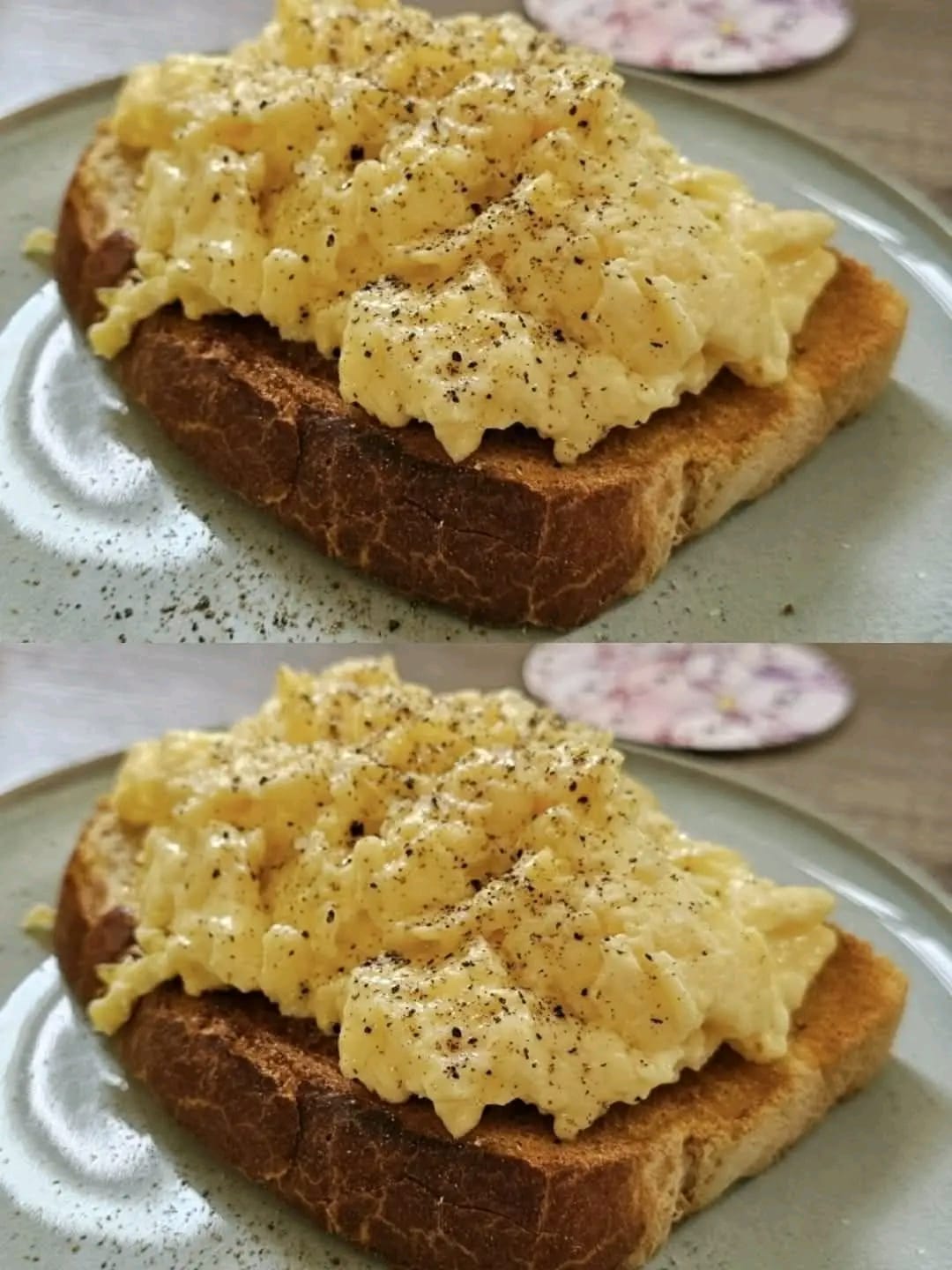
Repeat — slow, soft folds — every 10–15 seconds.
Remove from heat early
When the eggs are mostly set but still slightly glossy (about 2–3 minutes), take the pan off the heat.
The residual heat will finish cooking em — this prevents dryness.
Serve immediately
Transfer to warm plates.
Top with a pat of butter, fresh herbs, or cheese if desired.
 Serve with toast, avocado, or breakfast potatoes for a complete meal.
 Tips for the Best Scrambled Eggs
Use low heat
Prevents tough, rubbery eggs
Stirgently and often
Creates soft, custard-like texture
Adddairy or fat
Cream, milk, or butter adds richness and slows cooking
Don’t over-whisk
Too much air makes eggs foamy and less tender
Season after cooking
Salt too early can break down proteins and make eggs watery (optional — some chefs salt at the end)
 Easy Variations to Try
Cheesy scrambled eggs
Stir in cheddar, feta, or goat cheese at the end
Herb scramble
Add chives, dill, or parsley
Loaded breakfast style
Mix in cooked bacon, spinach, or tomatoes
French-style (baveuse)
Creamier, softer — cook even less for a runny center
Dairy-free
Skip milk — use a splash of water for fluffiness
 Frequently Asked Questions
Can I make scrambled eggs without milk?
Yes! Water or broth works too — or skip it entirely. The eggs will be richer and more eggy.
