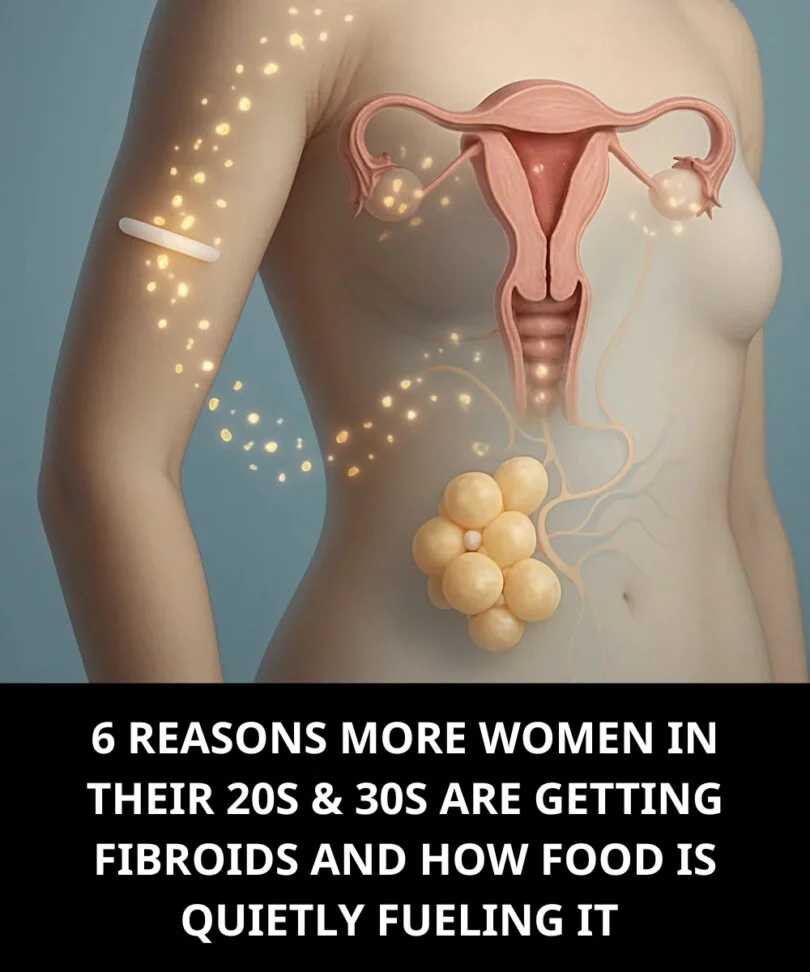
And How Food Is Quietly Fueling It 
Read This BEFORE Your Next Meal
Uterine fibroids were once considered a “later-in-life” issue. Today, doctors are seeing them show up earlier — sometimes before 30, often silently, and increasingly linked to modern lifestyle and dietary patterns.
Fibroids are non-cancerous growths that respond strongly to hormones, especially estrogen. While genetics matter, environmental and food-related factors are now impossible to ignore.
Below are 6 evidence-backed reasons fibroids are rising among younger women — and how everyday foods may be quietly contributing.
1. Estrogen Overload From Modern Diets
Fibroids are estrogen-sensitive tumors. The problem isn’t just the hormone your body makes — it’s the extra estrogen-like compounds coming from food.
Common contributors:
-
Conventional dairy and meat (often contain hormone residues)
-
Highly processed foods
-
Excess body fat (fat tissue produces estrogen)
When estrogen stays high for long periods, fibroid cells receive a constant “grow” signal.
Food pattern linked to higher risk:
Ultra-processed diets high in animal fat and low in fiber.
