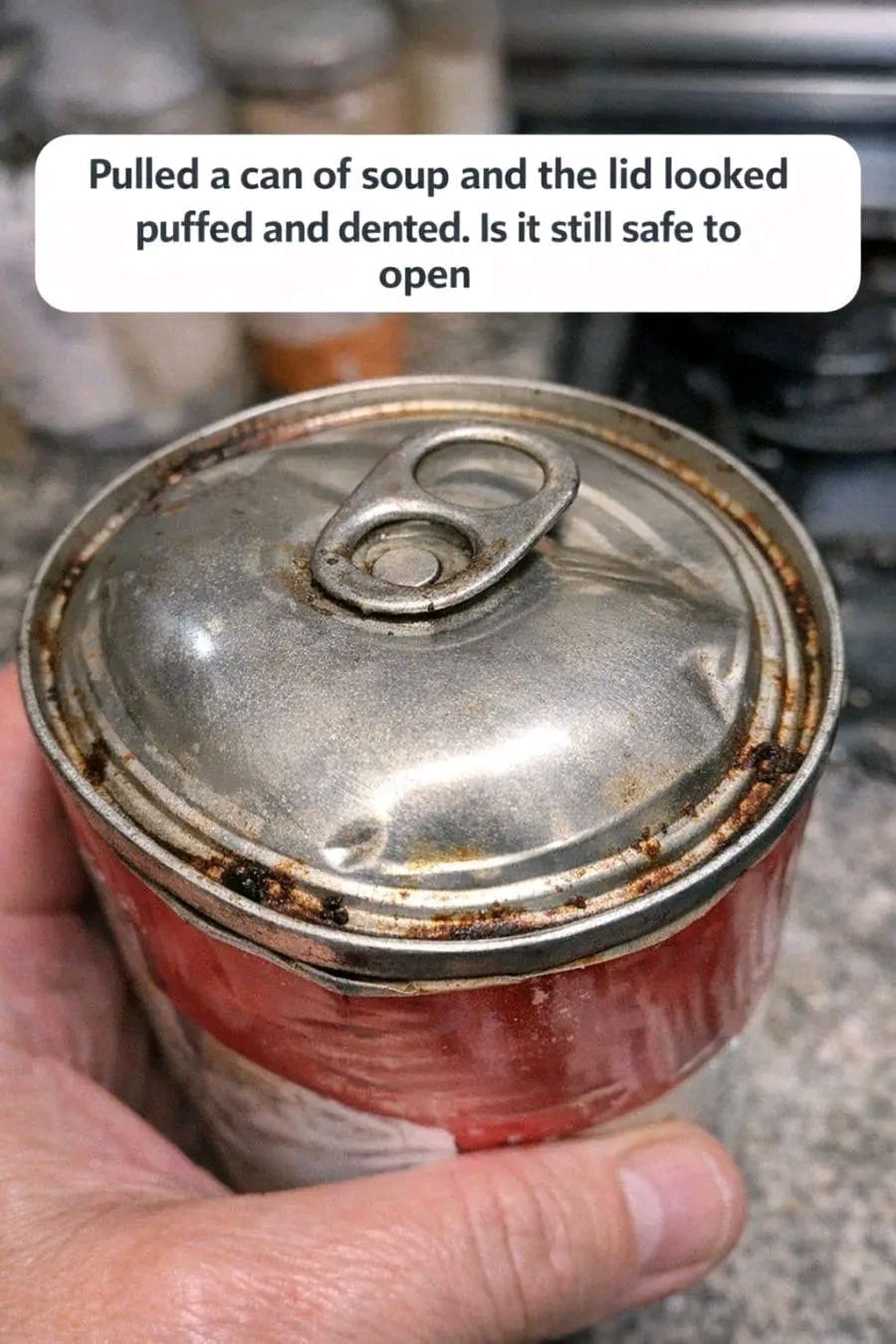
Canned goods are a staple in many households, offering a convenient and long-lasting option for meals. However, noticing that a can of soup has a puffed lid or is dented can be alarming. These physical changes can be indicative of potential safety issues, raising the question of whether it’s still safe to open and consume.
When a can is compromised, it is essential to understand the possible risks involved. This article will delve into why a puffed or dented can lid is a red flag and what steps you should take to ensure your safety when dealing with potentially dangerous canned goods.
1. Why a Puffing or Dented Can Lid Is a Red Flag
A can’s integrity is crucial for preserving its contents, and any change to its structure can signal a problem. A puffed lid is a significant warning sign indicating that gases have built up inside the can, often due to microbial growth. This puffing results from pressure exerted by these gases, which can distort the can’s shape.
Dented cans, especially those with damage along the seams or rims, are also concerning. The structural integrity of the can is compromised, which can lead to contamination. A dent can create a small opening or weaken the seal, allowing bacteria to enter and spoil the food inside.
2. How Gas Buildup Signals a Compromised Seal
The buildup of gas inside a can is often a sign that the seal has been compromised, allowing bacteria to proliferate inside. This fermentation or spoilage process produces gases that have nowhere to escape, causing the can to swell or even burst.
Pressure changes can also result from temperature fluctuations or improper storage, but microbial activity is the most common cause. Once the can is puffed, it indicates that the contents are no longer in a vacuum-sealed environment, which is necessary to inhibit bacterial growth and keep the food safe.
