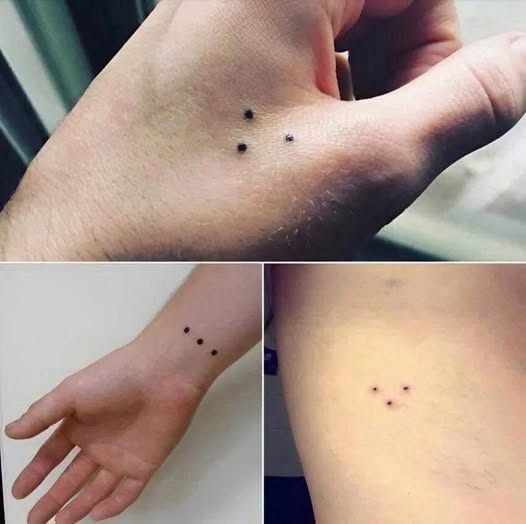
A Small Tattoo with Many Different Meanings
Have you ever heard someone say, “If you see someone with a three-dot tattoo, stay away”?
This warning has spread widely across social media, often creating fear and misunderstanding. While it’s true that the three-dot tattoo has been associated with certain criminal groups in some situations, its meaning is far from universal.
Today, the three-dot tattoo is worn by people for many different reasons, including family, faith, personal growth, resilience, cultural identity, and minimalist body art.
The most important thing to remember is this: a tattoo alone cannot reveal a person’s character, intentions, or lifestyle.
Why Is the Three-Dot Tattoo So Well Known?
Despite its simple appearance, the three-dot tattoo has attracted attention for decades because it has been interpreted differently across cultures and communities.
It may appear:
- On the hand
- Between the fingers
- Near the eye
- On the wrist
- Behind the ear
- On the ankle
- On the arm
Because the design is so small and subtle, many people assume it carries a secret message.
Sometimes it does.
Sometimes it doesn’t.
Without context, it’s impossible to know its true meaning.
The Meaning of “Mi Vida Loca”
One of the best-known interpretations of the three-dot tattoo is the Spanish phrase:
“Mi Vida Loca” (“My Crazy Life”)
For many people, this phrase represents life’s challenges rather than criminal activity.
It may symbolise:
- Surviving difficult experiences
- Personal resilience
- Overcoming hardship
- Learning from past mistakes
- A reminder of life’s journey
Although this symbol has appeared in some criminal subcultures, many people wear it without any connection to gangs or illegal activity.
