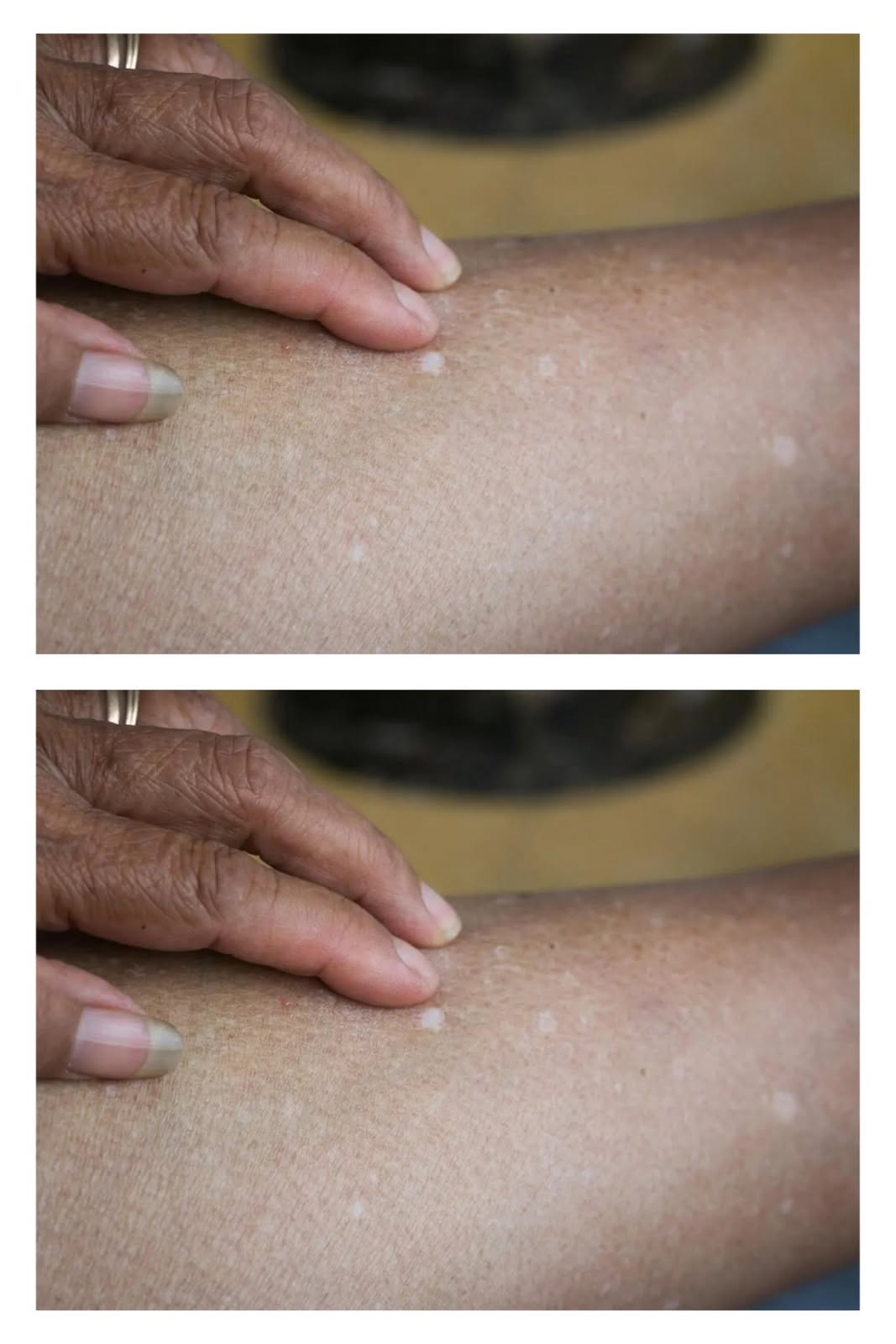
Many people suddenly notice small white spots on their arms or legs and immediately wonder whether they should be concerned. These tiny patches often appear without pain or itching, making them easy to ignore. In many cases, they are completely harmless. However, similar-looking spots can sometimes be associated with underlying skin conditions or changes that deserve medical attention. Understanding the most common causes can help you decide whether simple home care is enough or if it’s time to schedule a visit with a dermatologist.
One of the most common explanations is idiopathic guttate hypomelanosis (IGH). This condition causes tiny, flat white spots that usually appear on areas exposed to the sun, especially the forearms, shins, and legs. IGH becomes more common with age and is thought to result from long-term sun exposure. These spots are harmless, not contagious, and generally do not require treatment unless they are a cosmetic concern.
Another possibility is vitiligo, a condition in which the immune system attacks pigment-producing cells in the skin. Unlike IGH, vitiligo often produces larger, sharply defined white patches that may gradually spread. It can affect any part of the body, including the face, hands, and feet. While vitiligo is not dangerous, many people seek medical treatment to slow its progression or improve the appearance of affected skin.
A fungal infection called tinea versicolor may also cause pale or white patches. This condition is caused by an overgrowth of yeast that naturally lives on the skin. The patches may appear white, pink, or light brown depending on skin tone and often become more noticeable after sun exposure because the surrounding skin tans while the affected areas do not. Antifungal creams or medicated shampoos are usually effective treatments.
Dry skin, eczema, or previous skin injuries can also leave temporary lighter-colored patches after healing. This is known as post-inflammatory hypopigmentation. The skin usually regains its normal color over time, although the process may take several months.
Although uncommon, nutritional deficiencies, autoimmune disorders, or other medical conditions can occasionally contribute to changes in skin pigmentation. If the spots are accompanied by other symptoms such as fatigue, unexplained weight changes, numbness, or persistent itching, it is worth discussing these concerns with a healthcare professional.
