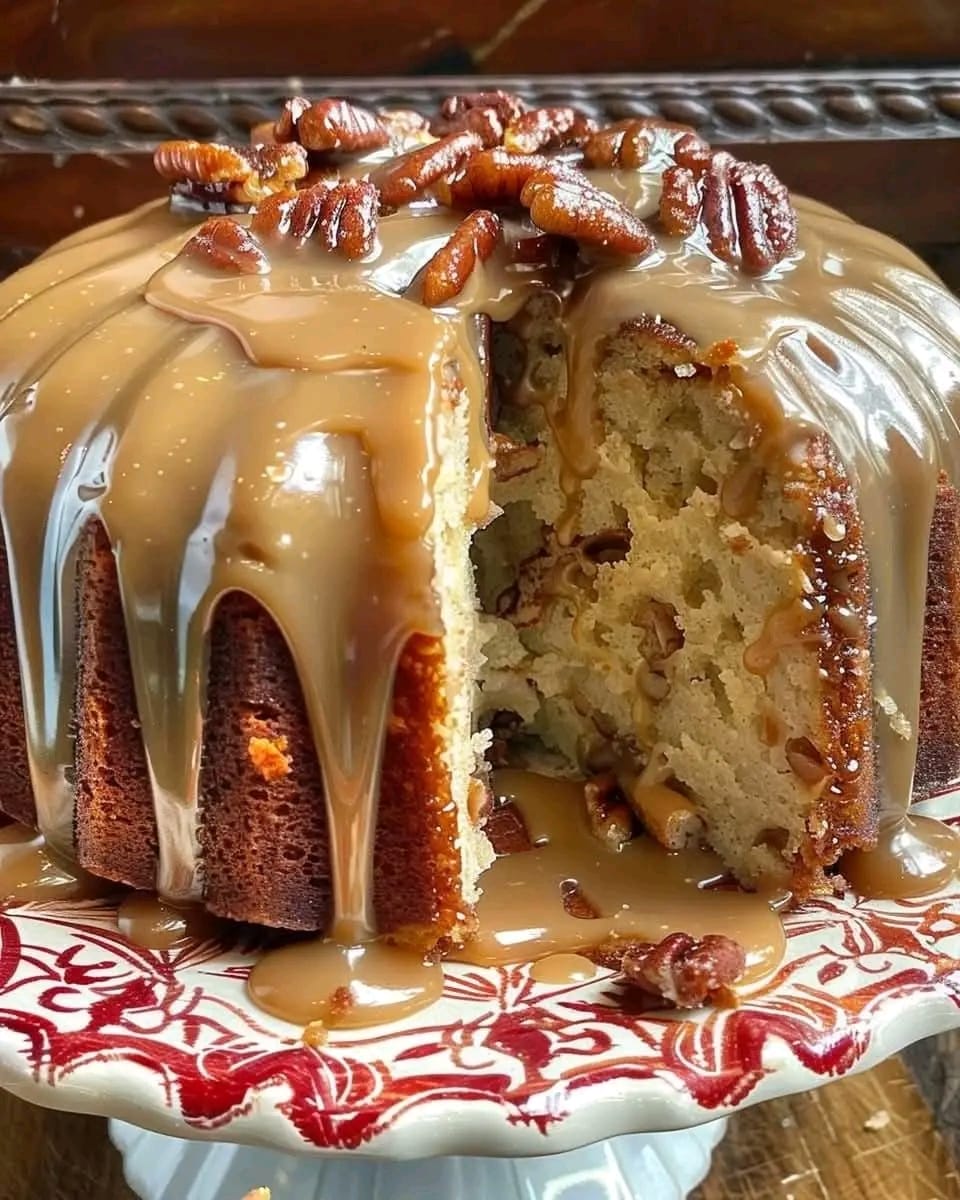
Glaze too thin or too runny
Warm glaze will be more fluid; allow it to cool briefly for a thicker pour. If the glaze consistently runs off, reduce the heavy cream by 1–2 tablespoons when finishing or simmer a little longer to concentrate it.
Candied pecans sticky
If pecans clump, spread them immediately on parchment and separate them while still warm. For a crisper finish, allow them to cool fully at room temperature—refrigeration may cause condensation and stickiness.
Storage & Make-Ahead
Room temperature: Store whole or sliced cake covered at room temperature for up to 2 days. Use an airtight cake keeper or wrap loosely with plastic to preserve the glaze sheen.
Refrigerator: Store in an airtight container for up to 5 days. Bring slices to room temperature or warm briefly before serving to restore softness.
Freezer: Freeze individual slices wrapped tightly in plastic and placed in a freezer bag for up to 3 months. Thaw overnight in the refrigerator and bring to room temperature before serving. Do not freeze the candied pecans on the cake; store them separately in an airtight container.
Make-ahead: The pecans can be made up to 3 days ahead and stored at room temperature. The glaze also keeps refrigerated for up to 5 days; warm gently before pouring. You may bake the cake a day ahead, glaze it the same day you plan to serve, and dress with candied pecans right before presentation.
Why This Recipe Works
The combination of brown butter and brown sugar introduces deep toffee and nutty notes that complement pecans. Using a high butter-to-flour ratio and multiple eggs creates the classic pound cake density while sour cream adds moisture and a subtle tang that balances the sweetness. Toasted pecans folded into the batter distribute flavor and texture evenly. Baking at a moderate temperature allows the cake to rise uniformly and the exterior to caramelize slowly, producing a dependable, richly flavored cake that holds a glaze well.
