4. Sprouting Potatoes
The Scare: “Are they poisonous?”
The Reality: Sprouts and green skin contain solanine, a natural toxin that can cause stomach upset in large quantities.
Verdict: Conditional. If the potato is firm and the sprouts are small, peel away the green parts and remove the eyes (sprouts). If the potato is shriveled, soft, or extensively green, toss it.
5. Mold on Hard Cheese (Cheddar, Parmesan)
The Scare: “Do I throw the whole block away?”
The Reality: Mold roots (mycelium) penetrate deep into soft foods (like yogurt or bread) but struggle to penetrate dense, hard cheeses.
Verdict: Salvageable. Cut at least 1 inch around and below the mold spot. Keep the knife out of the mold to avoid cross-contamination. The rest is safe to eat. (Note: For soft cheeses like brie or cream cheese, toss the whole container.)
6. Cloudy Juice in Meat Packages
The Scare: “Is this pus? Is it bad?”
The Reality: That liquid is “purge”—a mix of water and myoglobin (a protein that gives meat its red color). It leaks out as muscle fibers contract during freezing or storage.
Verdict: Safe. As long as the meat doesn’t smell sour or slimy, it’s fine. Pat it dry before cooking for a better sear.
 When to Actually Worry: The Real Red Flags
While weird shapes and colors are often harmless, these signs mean toss it immediately:
Slimy Texture: If meat, fish, or deli slices feel slippery or tacky, bacteria have multiplied.
Sour or Ammonia Smell: Trust your nose. Fresh food shouldn’t sting your nostrils.
Bulging Cans: This indicates botulism risk. Do not taste. Do not open. Recycle carefully.
Mold on Soft Foods: Bread, jam, yogurt, soft fruits, and cooked leftovers should be tossed entirely if mold appears. The roots go deeper than you can see.
Off Colors in Meat: Gray or brown ground beef can be safe if it’s just oxidized (lack of oxygen), but if it’s slimy or smells bad, it’s spoiled. Fresh poultry should never be gray or green.
 Smart Meal Prep Awareness
Knowing what’s safe helps you reduce waste and save money. Here’s how to stay sharp:
Label Everything: Use masking tape and a marker to date leftovers. Most cooked meals last 3–4 days in the fridge.
Trust Your Senses: Look, smell, and touch. If it passes all three, it’s likely fine.
When in Doubt, Throw It Out: If you’re genuinely unsure and can’t find a reliable source, it’s better to lose $5 worth of food than to risk foodborne illness.
Store Properly: Keep raw meat on the bottom shelf to prevent drips. Store produce in crisper drawers with correct humidity settings.
The Bottom Line
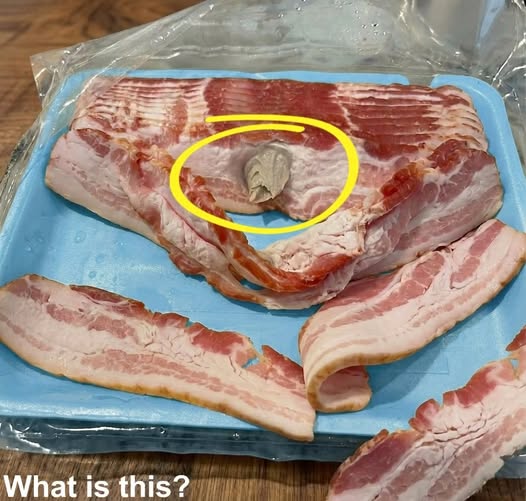
Food is a natural product, and nature isn’t always uniform. A weird chunk in your bacon, a green ring in your egg, or a sprout on your potato is usually just a quirk of biology, not a danger signal.
By learning the difference between “ugly but safe” and “actually spoiled,” you’ll waste less food, save money, and cook with confidence. So, next time you see that strange bacon chunk, just trim it off and enjoy your breakfast.
What’s the weirdest thing you’ve found in your food? Did you toss it or eat it? Share your stories in the comments below!