Packaging or Oxidation (of Metals)
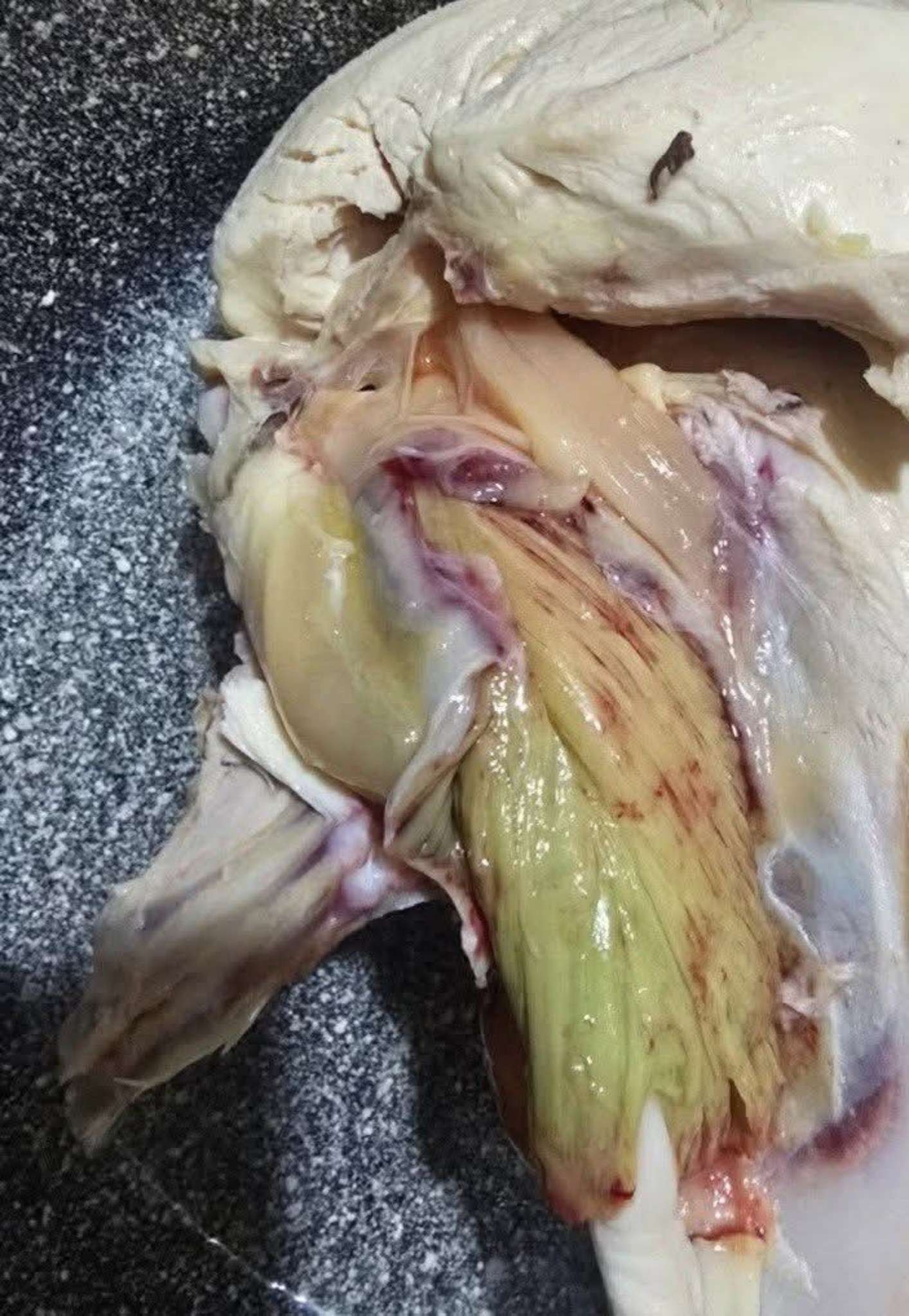
In some cases, the green color of the flesh is caused by an extraordinary accident from the illumination or from the plastic coverings of the flesh or from the natural coloring matter in the flesh. If you have ever seen roast beef with a scintillating type of luster or rainbow hues in its reflections, it is caused by the same principle by which light is bent by refractiveness, which is not a proof of decay of the meat at all. This is not so common with chicken as it is with the other varieties of flesh, nevertheless this sometimes obtains with chicken and especially in the vacuum-packaged meats.
Green Chicken and Whether It Is Edible
This brings us to the subject of where the green on the chicken is located. If you have the chicken out in front of you and have discovered that a patch of the chicken meat has a tinge of green, shall you throw it away or shall you eat it?
This is the procedure that I personally would use:
Smell the chicken. If there is the least bit of sweet, sulfur, or other odor, choose to throw it away. No matter how good it may look, the nose knows.
Touch the texture. The texture of freshly cooked chicken has a firm, moist feel, not a slimy, tacky, sticky one. If it is tacky, it is a bad sign.
Look at the patch of green. If it is internal and deep within the muscle, has no other smells, and the remaining meat is normal, it may be Green Meat Disease. This chicken is technically safe if cooked to an internal meat temperature of 165°F (74°C). But personally, I would not eat it. The crispy-skinned chicken normally does not have a good taste or texture in this condition.
Trust your instinct and follow your gut feeling. If something feels wrong, don’t force it. There are no bonus points for food safety-related bravery.
