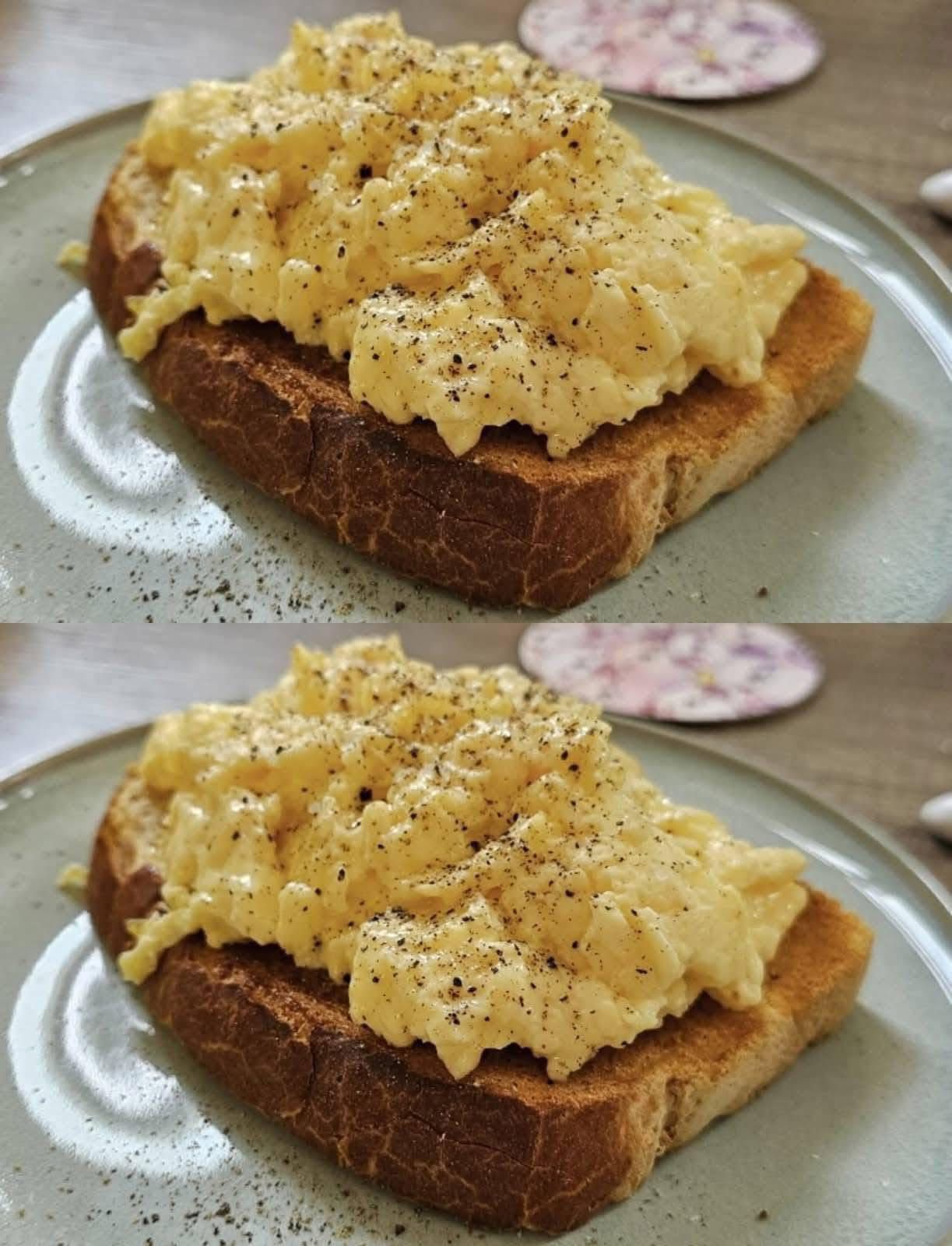
The Golden Rules for Perfect Scrambled Eggs
Low and Slow
This is the most important rule. Cooking over low heat is non-negotiable for creamy eggs. High heat makes them tough and watery.
Don’t Over-Whisk
Whisk just until the whites and yolks are combined. Over-whipping incorporates too much air, which can make the eggs spongy.
The Power of Fat
Use good butter. It adds incredible flavor and creates a non-stick barrier while emulsifying into the eggs for creaminess.
Stop Before They’re Done
Eggs continue to cook from residual heat after you remove them from the stove. Take them off the heat when they still look slightly wet.
The Method: French-Style Creamy Scrambled Eggs
This technique, inspired by the French, results in soft, custardy, delicate curds.
Ingredients (Serves 2):
-
4 large, fresh eggs
-
Pinch of salt
-
1 tablespoon (14 g) cold, unsalted butter, cubed
-
1 tablespoon (15 ml) heavy cream, crème fraîche, or full-fat milk (optional, for extra richness)
Equipment:
-
A non-stick or heavy-bottomed saucepan (not a large skillet)
-
A rubber spatula
Instructions:
Whisk Gently
Crack the eggs into a bowl. Add a pinch of salt—it helps break down the proteins for a more tender result. Whisk just until the yolks and whites are fully blended.
Preheat the Pan
Place your saucepan over low heat. Add the butter. Let it melt and foam slightly, but don’t let it brown.
Cook Slowly
Pour the eggs into the pan. They should sizzle gently, not violently.
-
Let them sit for about 10–15 seconds until a thin layer begins to set on the bottom.
-
Begin stirring slowly and constantly with your rubber spatula, using a folding motion and scraping the bottom and sides.
