Hydration
Circulation
Hormonal balance
Overall systemic health
Changes in the nail bed, shape, or surface may reflect deeper imbalances — especially if both fingernails and toenails are affected.
 Common Nail Changes & What They Might Mean
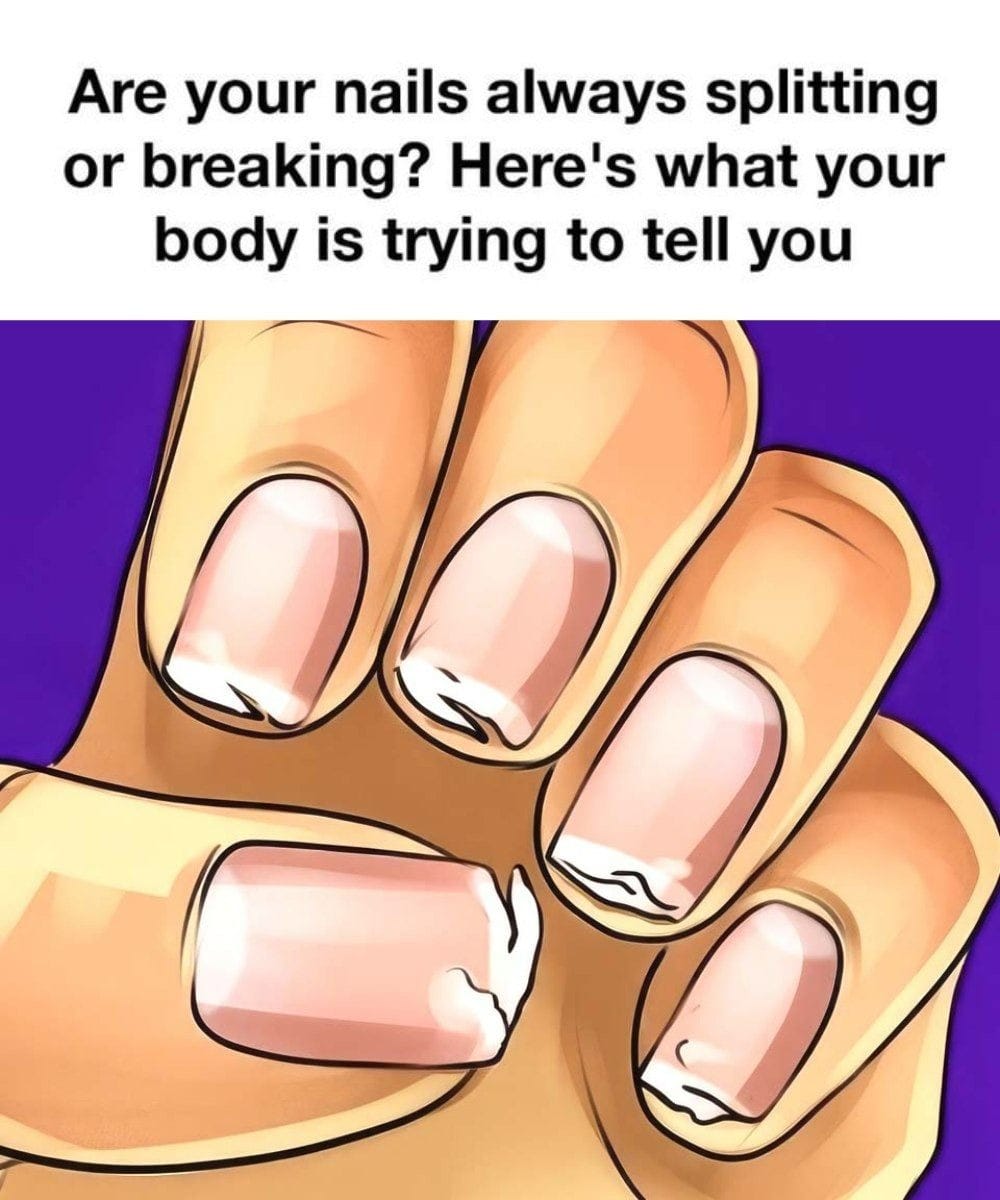
1. Brittle, Splitting, or Peeling Nails
Most common cause: Dryness or repeated wet-dry cycles (e.g., dishwashing, frequent hand sanitizer use)
Less common but possible:
Iron deficiency anemia – thin, spoon-shaped nails (koilonychia)
Thyroid disorders – hypothyroidism linked to dry, brittle nails
Aging – natural thinning of nail plates
Tip: Wear gloves when cleaning and moisturize hands regularly.
2. Vertical Ridges (Up-and-Down Lines)
Very common with age — like wrinkles for your nails
Usually harmless and genetic
 If sudden, deep, or discolored — could signal nutrient deficiency or psoriasis
No need to worry unless accompanied by pain, thickening, or color changes.
3. White Spots (Leukonychia)
Often caused by minor trauma (bumping the nail) — not zinc deficiency (myth!)
May appear weeks after injury due to slow growth
Harmless and fade over time
4. Yellow Nails
Possible causes:
Fungal infection (most common) – thickened, yellowed, sometimes crumbly nails
Smoking – stains from nicotine
Rarely: Lung disease, diabetes, or thyroid issues
Very rarely: Yellow nail syndrome (slow growth, lymphedema)
See a doctor if thickening or discoloration persists.
5. Spoon-Shaped Nails (Koilonychia)
Concave nails that can hold a drop of water
Strongly linked to iron-deficiency anemia
Also seen in: heart disease, hemochromatosis, trauma
Blood test needed to confirm diagnosis.
