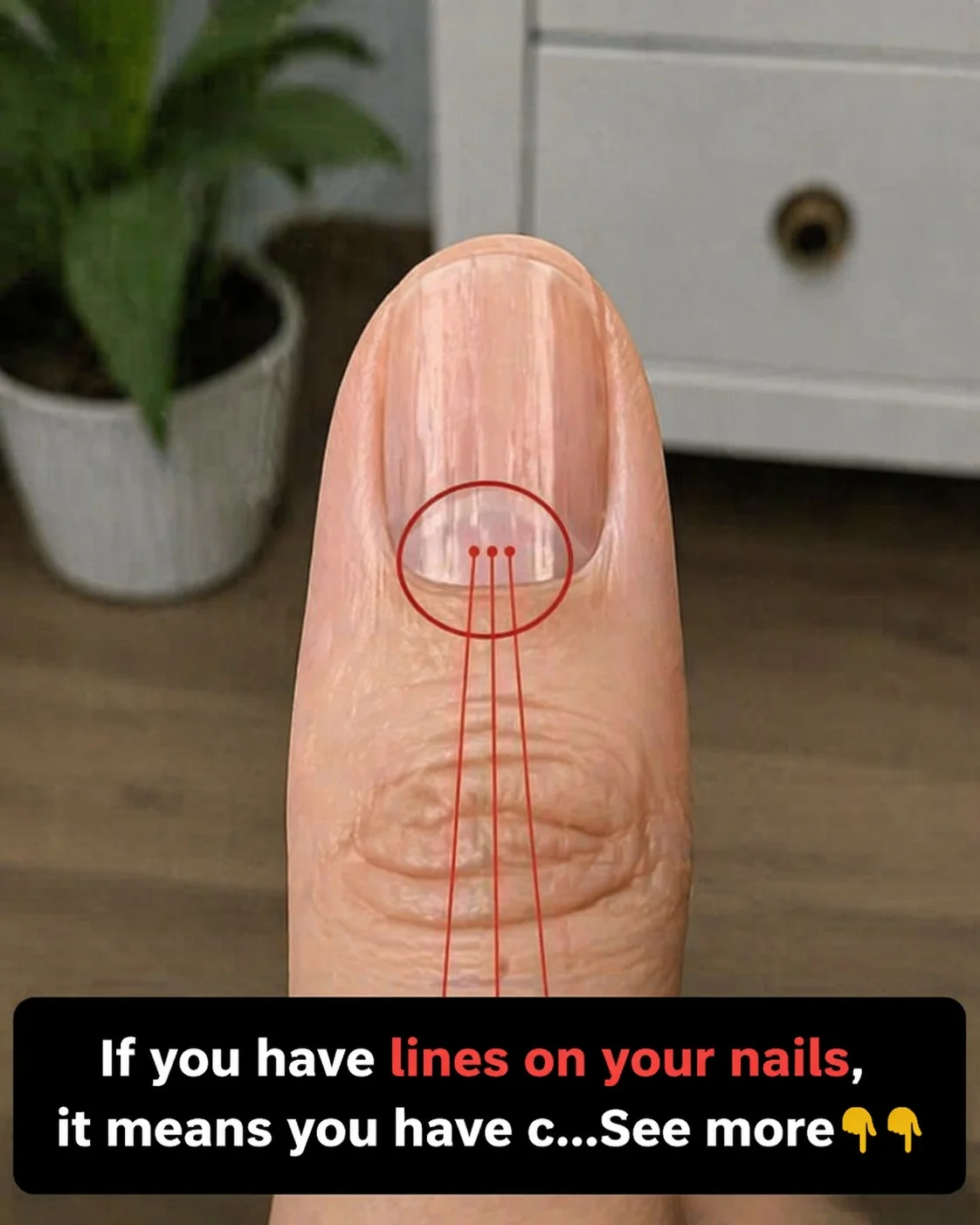
Lines on Your Nails? What They Could Be Telling You About Your Health
Horizontal Lines on Nails: The More Noticeable Warning Signs
Horizontal ridges, commonly referred to as Beau’s lines, are deeper grooves that run across the nail. These typically appear when nail growth temporarily slows or stops due to a significant stressor on the body.
According to dermatological insights, Beau’s lines can develop after:
- Serious illness or high fever
- Major surgery or physical trauma
- Periods of intense stress
- Certain medications, including chemotherapy
- Severe nutritional deficiencies, such as zinc shortage
Here’s what makes this part fascinating: Because nails grow slowly (about 3mm per month for fingernails), the position of the line can even give you a rough timeline of when the disrupting event occurred.
Types of Nail Lines Quick Comparison:
| Type | Appearance | Common Causes | When to Check with a Doctor |
|---|---|---|---|
| Vertical Ridges | Lengthwise, fine lines | Aging, dehydration, nutrient gaps | If sudden or with splitting |
| Horizontal Grooves (Beau’s lines) | Across the nail, deeper | Illness, stress, surgery | If multiple nails or no clear cause |
| Dark Vertical Lines | Brown/black streak | Trauma, pigmentation, rare melanoma | New or changing on one nail |
Other Nail Changes Worth Noting
Lines aren’t the only indicators. Color variations and texture shifts matter too. For instance, dark streaks under the nail, especially on one finger, deserve attention as they could relate to pigment changes or, in rare cases, more serious conditions.
Splinter hemorrhages – tiny red or brown lines – might stem from minor trauma but can sometimes relate to vascular issues.
But here’s the thing: Your nails grow from living tissue beneath the surface, so changes often mirror internal processes. Supporting them through good habits is a simple yet effective way to tune into your body’s signals.
When Should You Consult a Doctor About Nail Lines?
While most nail ridges are nothing to panic about, certain situations call for professional advice. If the lines appear suddenly, deepen quickly, or come with other symptoms like fatigue, weight changes, or skin issues, it’s wise to get checked.
Don’t ignore if:
- Lines affect most or all nails
- There’s discoloration, brittleness, or nail separation
- You have accompanying health symptoms
A healthcare provider can help rule out underlying concerns through simple tests. Early awareness often leads to better outcomes.
