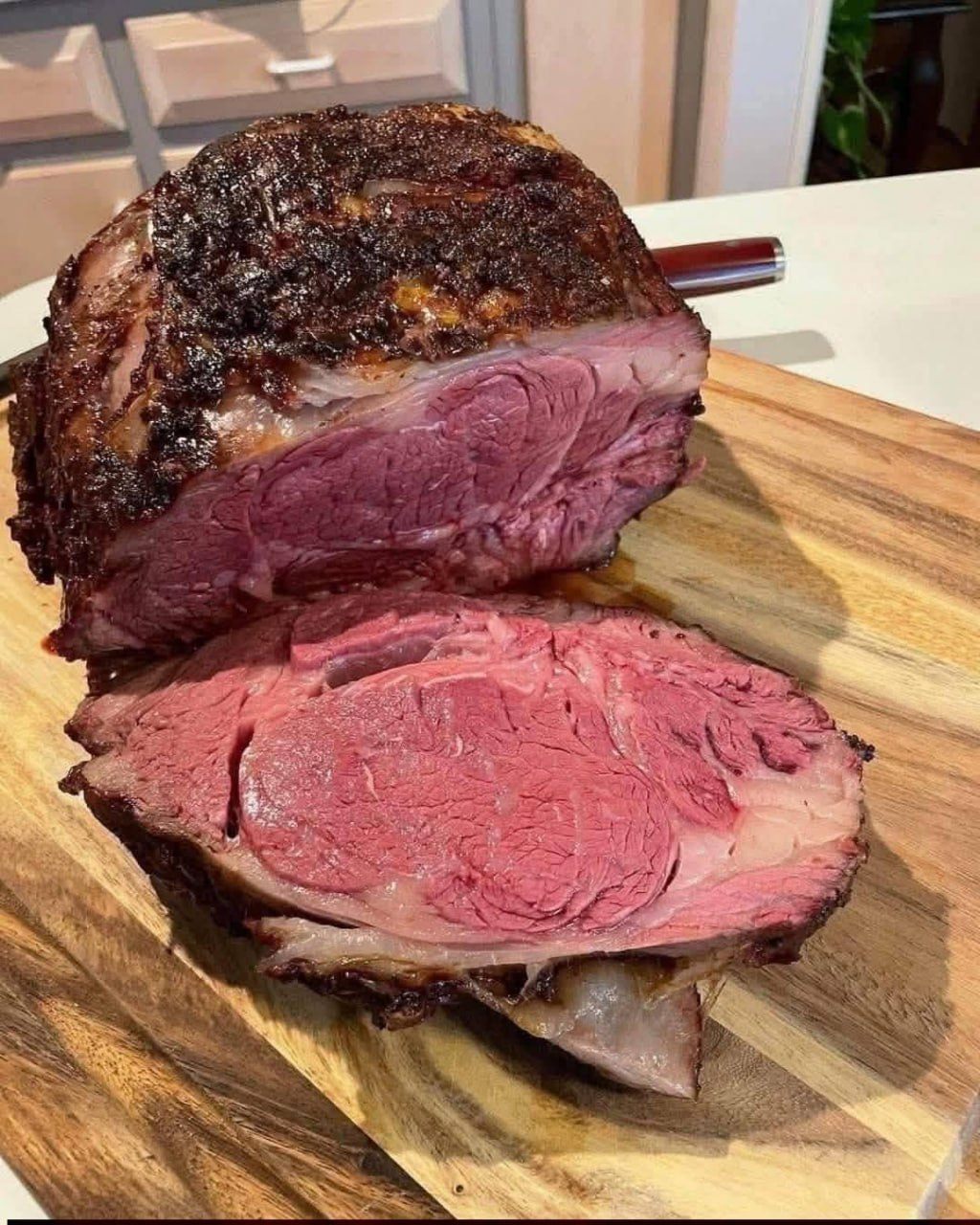
Mastering Prime Rib: From Butcher’s Cut to Table Glory
4.3 Use a Meat Thermometer
Insert the probe into the thickest part, avoiding bone.
Remember: The internal temperature will rise 5–10°F while resting, so remove the roast slightly early.
5. Creating the Perfect Crust
see continuation on next page
5. Creating the Perfect Crust
Ensure the roast is completely dry before seasoning.
Apply salt and pepper generously.
Use high heat at the start or finish under the broiler.
Butter or oil can enhance browning.
6. Resting the Roast
Resting is essential:
Tent loosely with foil for 20–30 minutes.
Juices redistribute, preventing them from spilling out during carving.
Internal temperature rises slightly during this time.
7. Carving Prime Rib
Carving is simple with the right tools and technique.
7.1 Tools
Sharp carving knife (or electric knife)
Cutting board with a groove for juices
7.2 Steps
Remove the bones if desired by slicing along the rib line.
Slice into even portions, ½–1 inch thick.
Cut against the grain for maximum tenderness.
Serve immediately with pan juices or au jus.
8. Accompaniments and Sides
Prime rib pairs beautifully with both classic and creative sides.
8.1 Traditional Sides
Yorkshire pudding or dinner rolls
Creamed spinach
Roasted root vegetables
Mashed potatoes or gratin dauphinois
8.2 Sauces
Au Jus: Pan drippings with beef stock and wine
Horseradish Cream: Sour cream, horseradish, lemon juice
Garlic Herb Butter: Butter mixed with garlic, parsley, and thyme
9. Tips for an Unforgettable Prime Rib
Choose quality over quantity.
Season generously.
