7. Moving It Too Soon: Letting the Meat Naturally Release
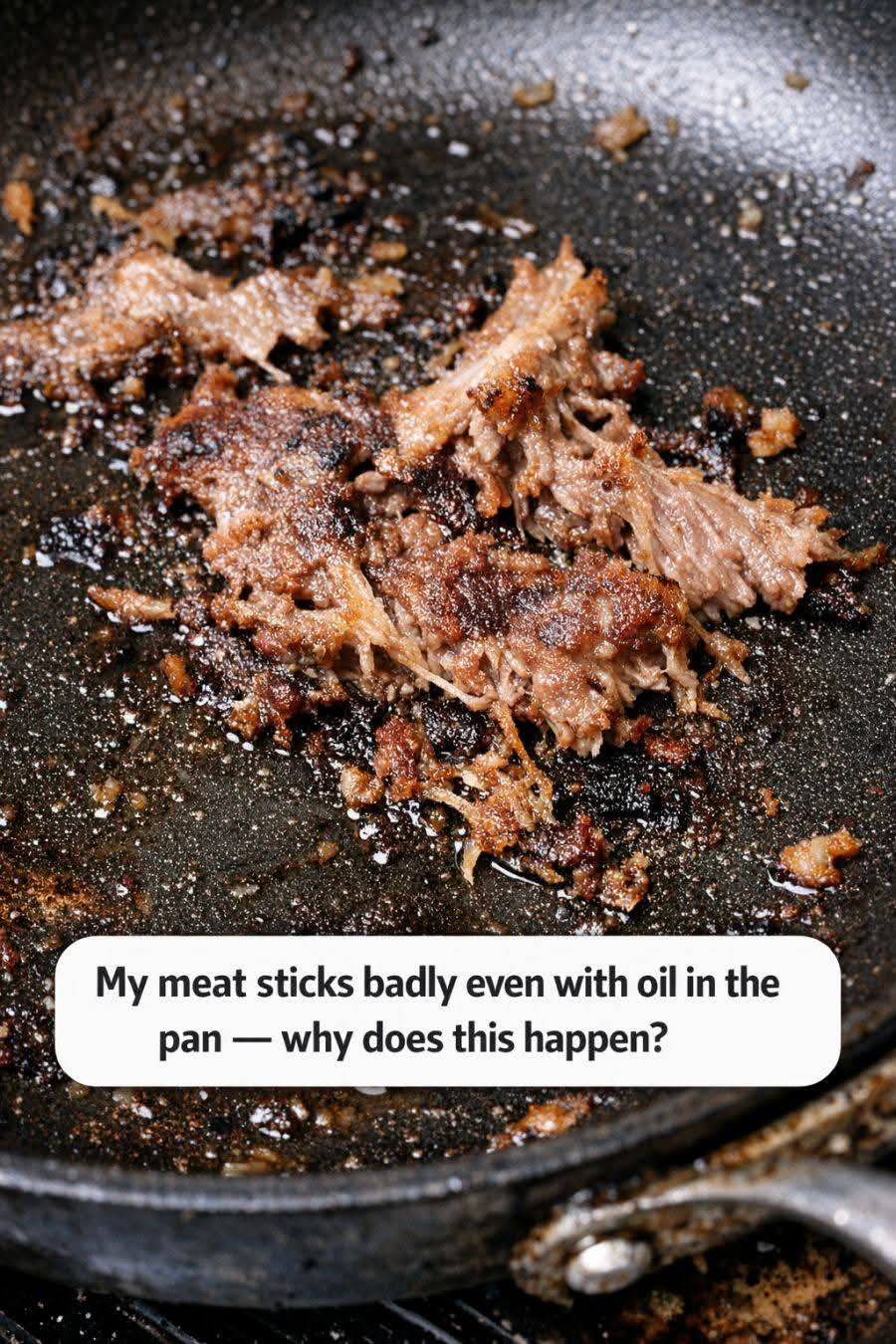
One common mistake is trying to move the meat too soon. When meat is initially added to the pan, it will naturally stick. However, after a few minutes of cooking, it will release itself as the proteins denature correctly and form a crust. Patience is key—wait until the meat releases naturally before flipping or stirring.
8. Marinades, Sugars, and Seasonings That Burn and Stick
Marinades and seasonings that contain sugars can caramelize quickly and stick to the pan, especially if the pan is too hot. To prevent this, cook the meat at a slightly lower temperature or add these ingredients later in the cooking process. Additionally, ensure that any excess marinade is wiped off before cooking.
9. Pan Crowding and Temperature Drop: The Hidden Sticking Trap
Crowding the pan drops the temperature, leading to steaming rather than searing, which increases sticking. It’s important to leave enough space around each piece of meat to allow for even cooking and proper browning. If necessary, cook in batches to maintain optimal pan temperature.
10. How to Fix Sticking in the Moment Without Ruining Dinner
If your meat sticks, don’t panic. Let it cook for a moment longer to see if it naturally releases. If not, use a thin spatula to gently loosen the edges and work your way underneath. Adding a small amount of liquid, like broth or wine, can help deglaze the pan and release the stuck pieces without tearing the meat.
11. Simple Prep Habits That Practically Eliminate Sticking
Developing good cooking habits can drastically reduce sticking. Always preheat your pan thoroughly, dry your meat before cooking, and use the right amount of oil. Allow the meat to come to room temperature and avoid overcrowding the pan. These practices, combined with using the right type of pan, will help ensure a smooth cooking experience.
