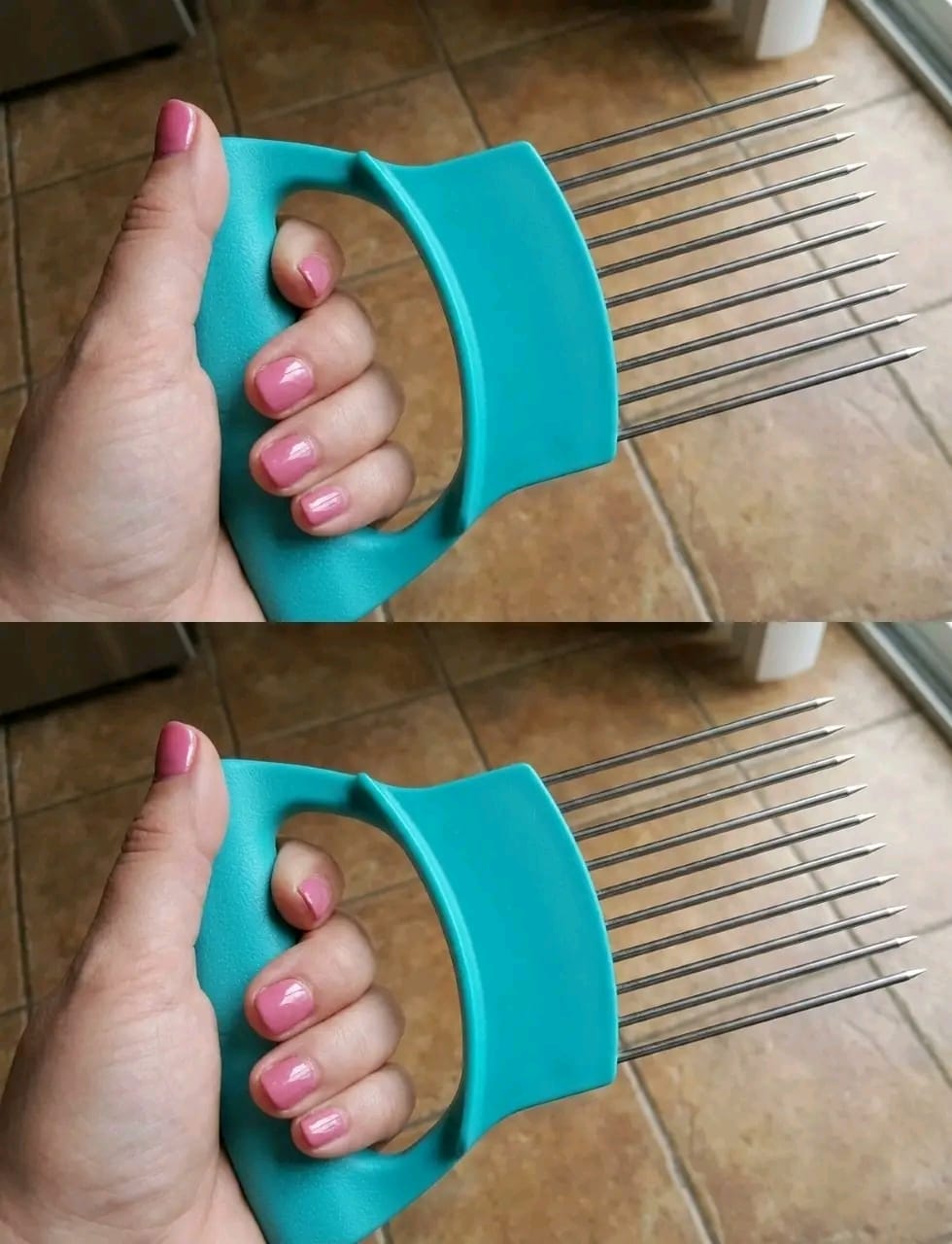
🥒 What You Can Slice With It
-
Onions (yellow, red, white)
-
Potatoes (for chips or scalloped dishes)
-
Cucumbers (for pickles or salads)
-
Zucchini or summer squash
-
Apples (for pies or snacks)
-
Carrots (if not too thick)
Avoid: Soft fruits (bananas, ripe tomatoes), very hard roots (sweet potatoes, beets), or anything with a tough core.
🧼 How to Use It Safely & Effectively
-
Place the slicer on a stable surface (a non-slip mat helps).
-
Trim the ends off the vegetable so it sits flat.
-
Press firmly and evenly through the blades—use a pusher or the heel of your hand.
-
Rinse immediately after use, as food can get stuck between the blades.
-
Dry thoroughly to prevent rust (if metal) or odor buildup (if plastic).
Pro Tip: Sprinkle sliced onions with a pinch of salt to reduce sharpness and enhance sweetness.
♻️ Thrift Store Find? Clean It Well!
Final Thought
That odd little gadget isn’t junk—it’s a time-saving, tear-reducing kitchen helper from an era that valued practicality. While it may not replace your knife for everything, it’s perfect for quick weeknight prep or for anyone who dreads onion duty.
So next time you see one at a thrift store for $1, grab it. Your future self—and your eyes—will thank you.
“Sometimes the simplest tools solve the oldest problems.”
Have you used an onion slicer? Love it or toss it? Share your experience—we’re all decoding kitchen mysteries together. 🧅
