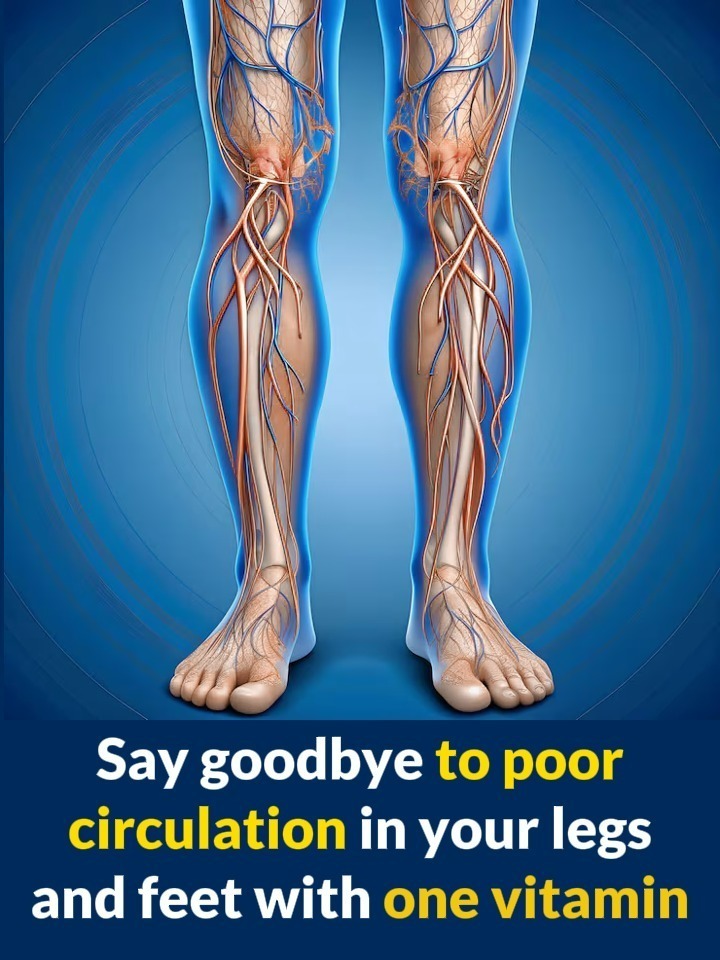
Dilates arteries and capillaries, especially in the legs and feet
Lowers LDL (“bad”) cholesterol and raises HDL (“good”) cholesterol, reducing plaque buildup in arteries
Supports endothelial function—the inner lining of blood vessels that regulates blood pressure and flow
Reduces inflammation in vessel walls, a key factor in atherosclerosis
Many people report a “niacin flush”—a harmless, temporary tingling or warming sensation in the face, arms, or legs—within 20–30 minutes of taking it. This is a visible sign that blood vessels are opening up and circulation is improving.
 Important: The flush is not dangerous, but it can be uncomfortable. It’s caused by immediate-release niacin—not the “no-flush” versions (more on that below).
 The Big Mistake People Make with Niacin
Many buy “no-flush” niacin (inositol hexanicotinate), thinking it’s safer or more comfortable. But here’s the truth: it may not work for circulation.
Immediate-release niacin: Causes flush but proven to improve cholesterol and blood flow
No-flush niacin: Often lacks the same vascular benefits because it doesn’t release active niacin effectively
 For circulation support, experts recommend pharmaceutical-grade immediate-release niacin—but only under medical supervision.
 Safe Dosage Guidelines
Dietary intake (from food): 14–16 mg/day (found in meat, fish, nuts, mushrooms)
Therapeutic dose for circulation/cholesterol: 500–1,500 mg/day—only with doctor approval
Never self-prescribe high-dose niacin—it can cause liver toxicity, blood sugar spikes (risky for diabetics), or interact with medications
 Always consult your doctor before starting niacin, especially if you have liver issues, gout, diabetes, or take statins or blood pressure meds.
 4 Other Vitamins & Nutrients That Boost Leg Circulation
Niacin is powerful—but it works best as part of a circulation-supporting nutrient team:
