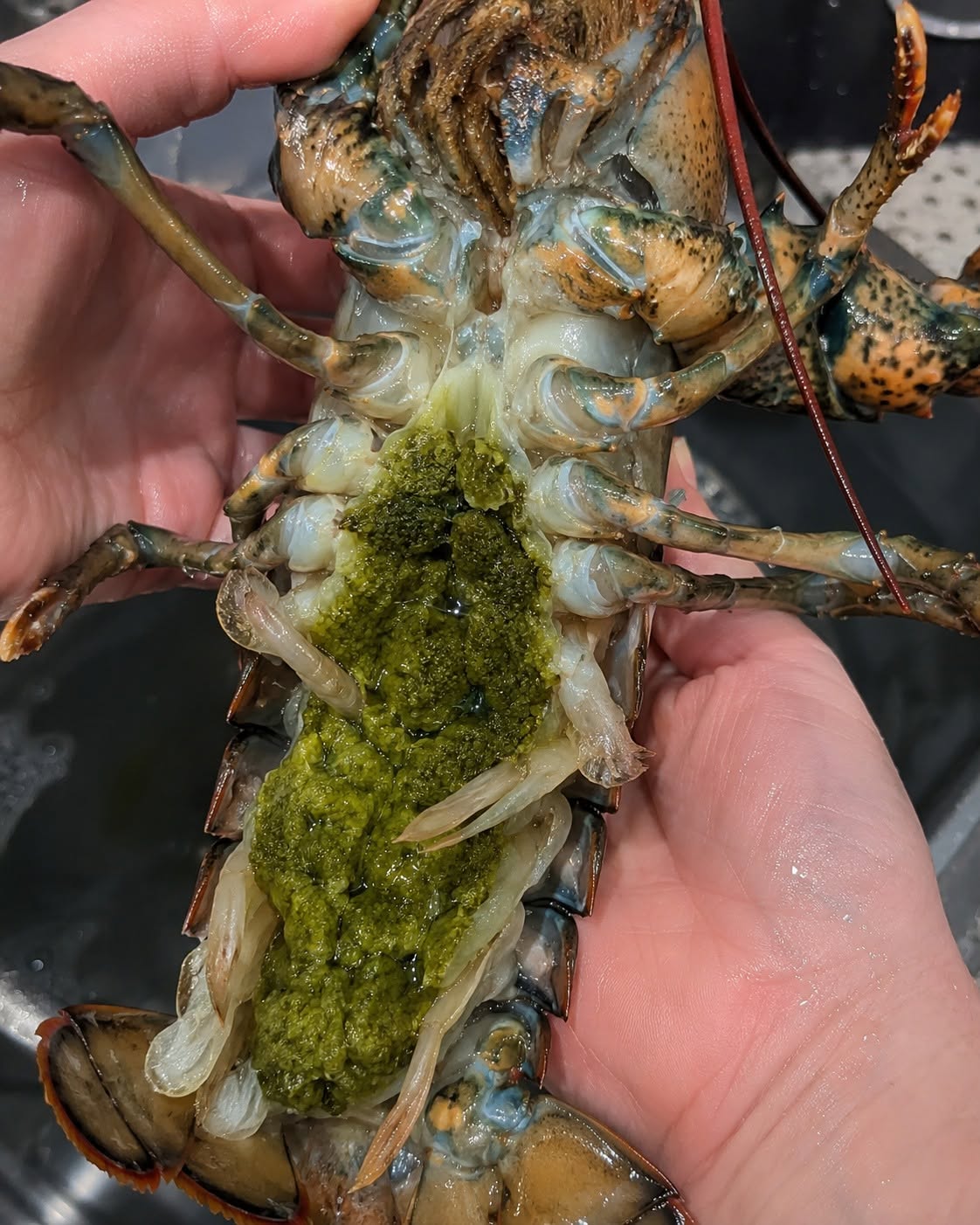
The Mystery of Lobster’s Green Goodies
Grab your favorite beverage, and let’s uncover the mystery of the green stuff, why doctors are warning us about it, and how to make a safe, luxurious, heart-healthy green dip that tastes a million times better!
The Big Reveal: What is the “Green Stuff”?
When you open up a cooked lobster, you might notice a bright green, paste-like substance in the body cavity. In the culinary world, this is called tomalley.
Here is the fascinating kitchen-and-biology science behind it: The tomalley is actually the lobster’s liver and pancreas. Just like our own livers, the tomalley’s job is to filter impurities, process nutrients, and protect the creature from toxins in its environment.
(Note: You might also see some red, coral-like bits. That is the roe, or the lobster’s eggs. It is perfectly safe to eat and is considered a delicacy, but the green tomalley is a different story!)
The Health Warning: Why We Skip the Tomalley
For generations, some old-school fishermen considered the tomalley a delicacy, spreading it on crackers like a rich, briny pâté. But modern medical professionals and environmental scientists strongly advise against eating it, especially for older adults, pregnant women, or anyone focused on long-term wellness.
Here is why I always leave the green stuff behind:
1. The “Filter” Trap
Because the tomalley is the lobster’s filtration organ, it acts like a sponge for whatever is in the water. If the ocean water contains heavy metals, PCBs, or environmental pollutants, those toxins are stored directly in the tomalley. By eating it, you are essentially eating the concentrated waste filter of the ocean!
