Who Is Most at Risk?
Risk factors include:
- Age over 50
- Frequent hand washing
- Repeated exposure to water
- Chemical exposure
- Nutritional deficiencies
- Thyroid disease
- Psoriasis
- Eczema
- Manual labor
- Nail biting
How Doctors Diagnose the Cause
A healthcare provider or dermatologist will usually begin with a physical examination and medical history.
Depending on your symptoms, additional tests may include:
- Blood tests for iron, vitamin B12, zinc, and thyroid function
- Nail clippings or scrapings to check for fungal infection
- Dermoscopy (a close examination of the nail)
- Nail biopsy in rare cases if a tumor or other serious condition is suspected
Treatment
Treatment depends on the underlying cause.
Possible options include:
- Treating nutritional deficiencies
- Managing thyroid disorders
- Antifungal medication if a fungal infection is confirmed
- Prescription creams for eczema or psoriasis
- Repairing or protecting the nail while it grows out
- Surgical treatment if an abnormal growth is found
Because fingernails grow slowly, improvement may take 4–6 months, while complete replacement of a fingernail can take 6–9 months.
Home Care Tips
You can help protect your nails by:
- Keeping nails trimmed short.
- Applying a fragrance-free moisturizer to your nails and cuticles daily.
- Wearing gloves when cleaning or washing dishes.
- Avoiding harsh nail products and excessive acetone.
- Eating a balanced diet rich in protein, iron, zinc, and vitamins.
- Avoiding nail biting or picking.
- Using nails only for their intended purpose—not as tools.
When Should You See a Doctor?
Arrange a medical evaluation if:
- The split extends to the base of the nail.
- Only one nail is affected and the split persists.
- The nail becomes painful or bleeds.
- The nail changes color (especially dark brown or black streaks).
- The surrounding skin becomes swollen or infected.
- Multiple nails become brittle or split suddenly.
- You also have symptoms such as fatigue, weight changes, or hair loss.
Can Nail Splitting Be Prevented?
Many cases can be prevented by:
- Moisturizing the nails regularly.
- Protecting hands from prolonged water exposure.
- Wearing gloves when handling chemicals.
- Eating a nutrient-rich diet.
- Treating underlying medical conditions promptly.
- Avoiding trauma to the nails.
The Bottom Line
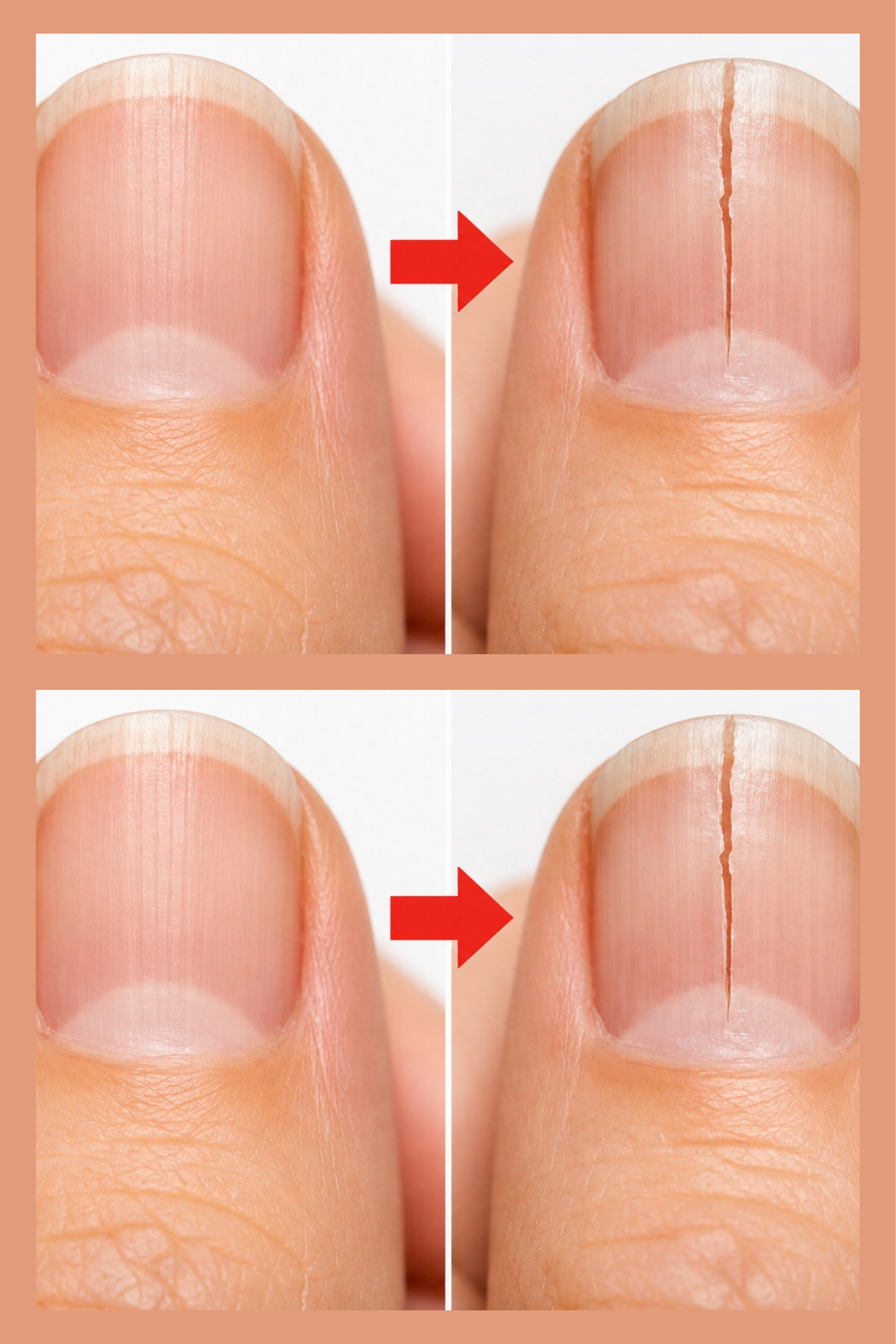
A vertical split down the middle of a fingernail is often caused by aging, repeated trauma, excessive moisture exposure, or dry, brittle nails. However, persistent or worsening nail splitting can sometimes be an early sign of nutritional deficiencies, thyroid disease, inflammatory skin conditions, fungal infection, or, in rare cases, a tumor affecting the nail matrix. Paying attention to changes in your nails—and seeking medical advice when a split does not heal or is accompanied by pain, discoloration, or other symptoms—can help identify underlying conditions early and protect your long-term nail health.
Medical Disclaimer: This article is for educational purposes only and should not replace professional medical advice, diagnosis, or treatment. If you develop a persistent split nail, especially one affecting a single nail or associated with pain, bleeding, or color changes, consult a dermatologist or healthcare provider for a proper evaluation.
