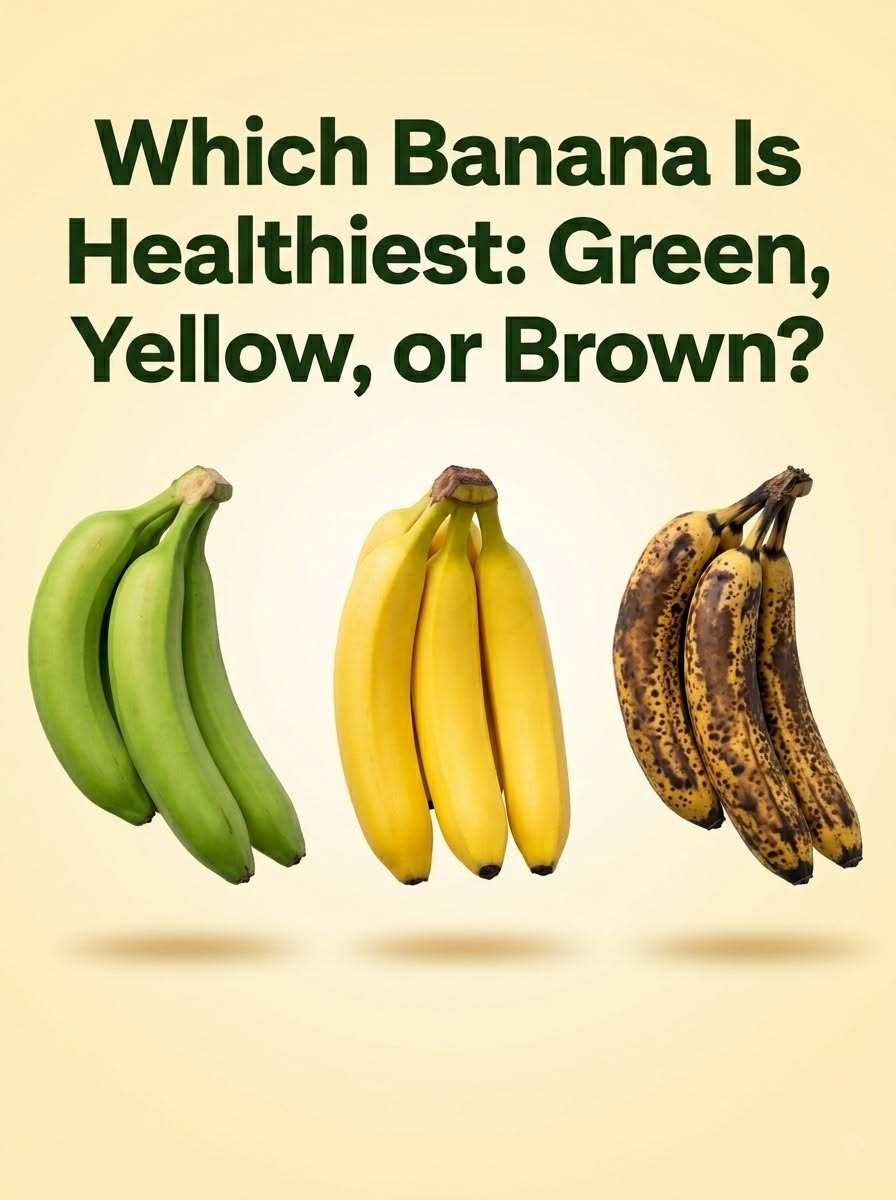
Who Should Choose Brown Bananas?
Brown bananas can be especially helpful for:
People with sensitive digestion
Older adults
Athletes needing quick energy
Anyone looking to increase antioxidant intake
How Banana Ripeness Affects Digestion
One of the biggest differences between green and ripe bananas is how they affect your digestive system.
Green Bananas
Digest more slowly
Feed beneficial gut bacteria
Provide resistant starch
Ripe and Brown Bananas
Easier to digest
Softer on the stomach
Provide soluble fiber that supports regular bowel movements
If you frequently experience digestive discomfort, fully ripe bananas may be the gentler choice.
What About Blood Sugar?
The ripeness of a banana can influence how quickly it affects blood sugar levels.
Green Bananas
Because they contain more resistant starch and less sugar, green bananas tend to have a lower glycemic impact.
Yellow and Brown Bananas
As starch converts into sugar, ripe bananas digest more quickly and may raise blood sugar faster.
This doesn’t mean ripe bananas are unhealthy. Pairing them with protein or healthy fats—such as peanut butter, Greek yogurt, or nuts—can help slow sugar absorption and create a more balanced snack.
Antioxidants: Why Brown Bananas Stand Out
One of the most surprising nutritional changes during ripening is the increase in antioxidants.
Antioxidants help protect cells from oxidative stress and inflammation, which are linked to aging and various chronic health conditions.
Brown bananas contain higher concentrations of beneficial antioxidant compounds than less-ripe bananas, making them a valuable addition to a balanced diet.
Are There Any Downsides?
While bananas are generally well tolerated, some individuals may experience sensitivities.
