- Bacterial growth
- Spoilage
- Chemical contamination
- Freshness (shiny meat can be fresh; dull meat can be past its prime)
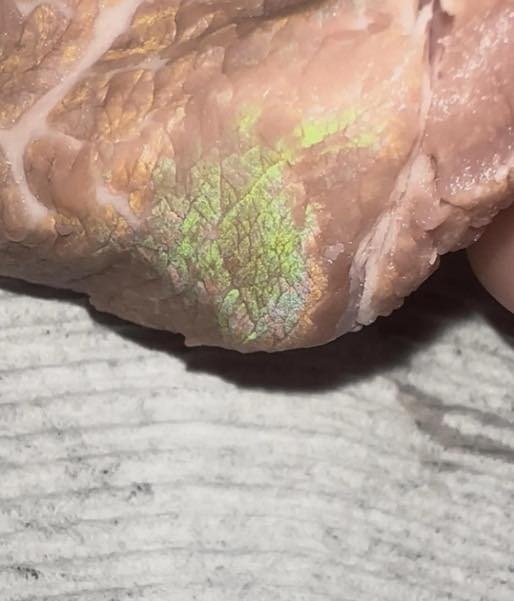
If your meat smells sour, feels slimy, or shows green/black mold? Then it’s time to toss it. But a rainbow sheen? That’s just physics saying hello.
 To Hide or Embrace the Glow?
While you can’t eliminate it (it’s built into the slice), you can minimize visibility:
- Store deli meat in opaque containers (blocks light exposure)
- Keep slices tightly wrapped (reduces surface oxidation that can enhance sheen)
- Serve on dark plates (contrasts less than white)
But here’s a better idea: celebrate it.
That shimmer is a testament to craftsmanship—the precise cut of a skilled butcher, the integrity of whole-muscle meat, the quiet wonder of natural physics at your fingertips. It’s food as art, science, and sustenance—all in one slice.
In a world of ultra-processed foods and artificial colors, there’s profound beauty in a phenomenon this honest: no additives, no tricks—just muscle, light, and the elegant laws of nature.
So next time your roast beef glows like an opal, don’t flinch.
Pause. Lean in.
And take a moment to marvel at the quiet miracle on your plate—
before building the most scientifically spectacular sandwich of your life.
