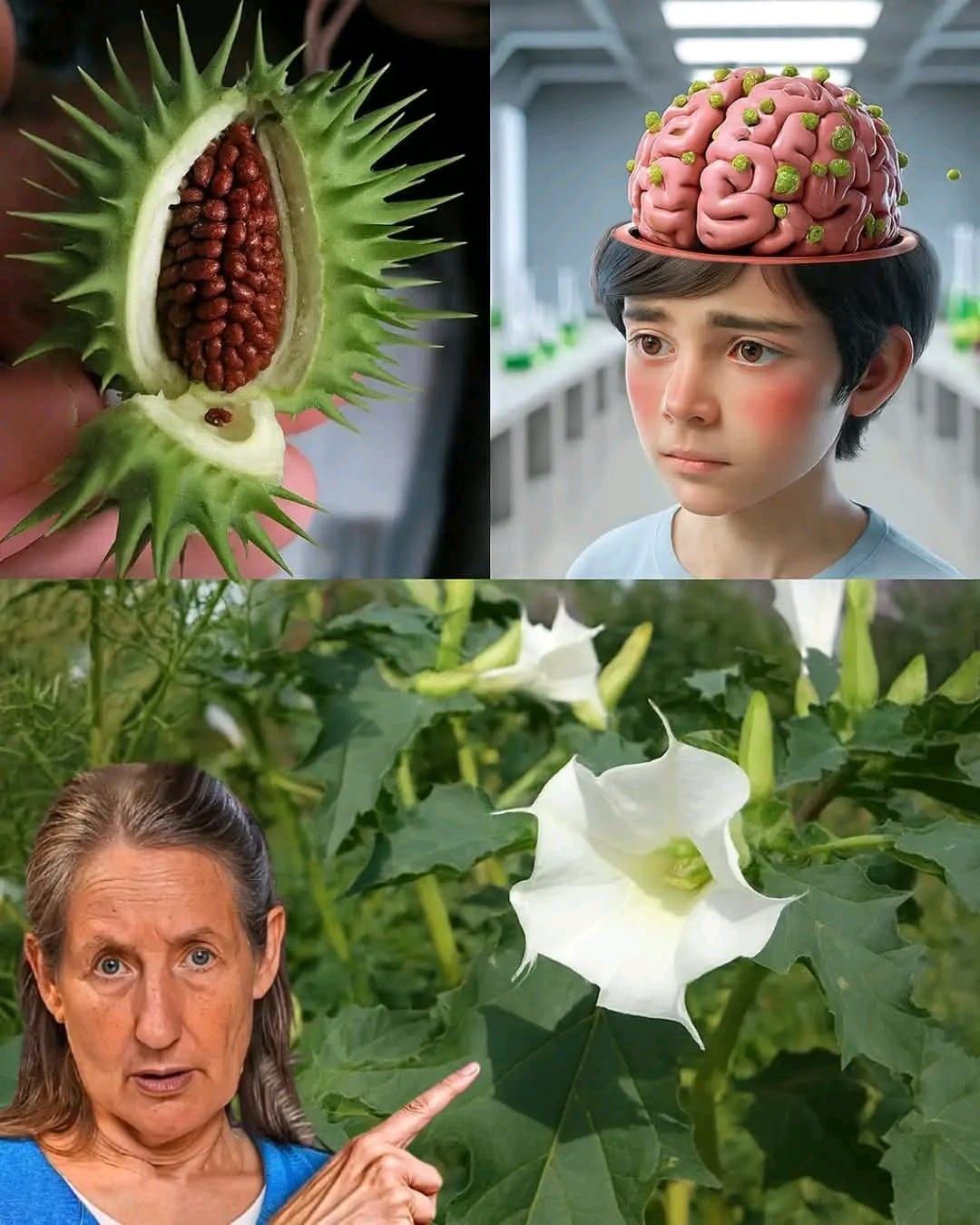
Datura, a member of the nightshade family (Solanaceae), is a fast-growing plant that thrives in disturbed soils, roadsides, and gardens worldwide. Its striking features—large, trumpet-shaped flowers and spiky, walnut-sized seed pods—make it a favorite among gardeners seeking dramatic flair. But beneath its alluring exterior lies a chilling truth: every part of the Datura plant, from its leaves to its seeds, is laced with potent toxins. Historically used in rituals and traditional medicine, Datura’s unpredictable toxicity makes it a risky encounter, whether by accident or curiosity.Why does Datura fascinate and terrify? Its dual nature as both a beautiful ornamental and a deadly poison taps into our curiosity about nature’s paradoxes. Let’s explore its characteristics, dangers, and how to stay safe around this captivating yet hazardous plant.Ingesting or mishandling Datura can lead to a range of terrifying effects, including:Hallucinations and Delirium: Vivid, often