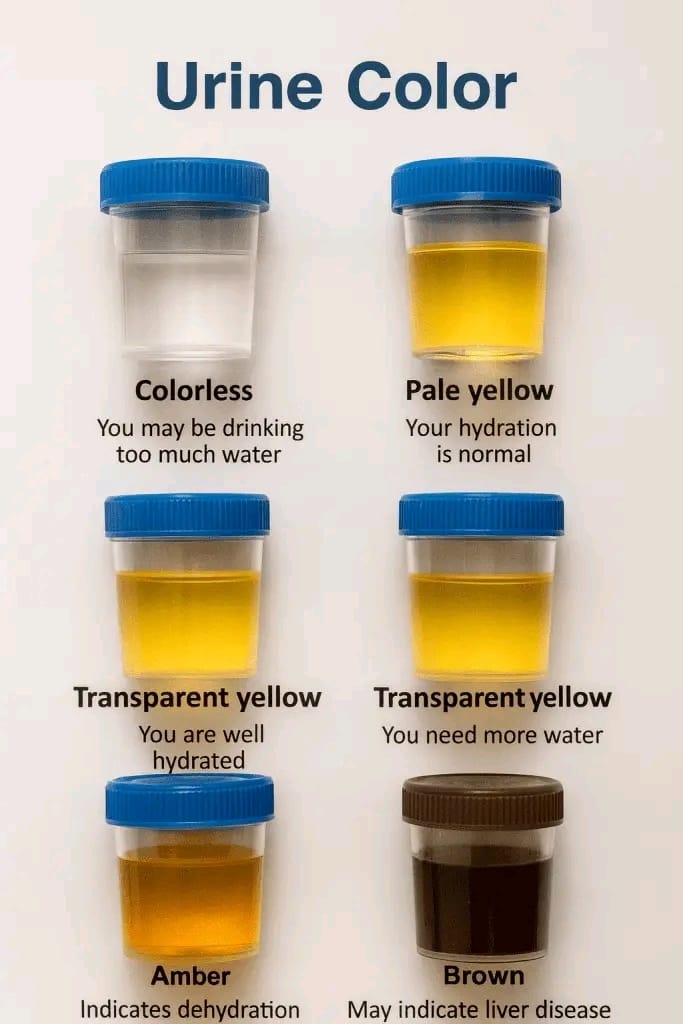
 Dark Yellow or Amber: A Gentle Nudge to Drink Up
Noticing a deeper yellow or amber hue? This is often a sign of mild dehydration. Your body is concentrating your urine to conserve water, resulting in a darker color. It’s a friendly reminder to give your system more fluids.
What to do: Reach for a glass of water, herbal tea, or even water-rich foods like cucumber or watermelon. Try to sip consistently throughout the day rather than waiting until you’re thirsty. If you’re active or live in a hot climate, you may need to increase your intake slightly to keep this shade in check.
 Honey or Light Brown: Time to Pay Attention
If your urine takes on a honey-like or light brown tint, it’s a stronger signal that dehydration may be setting in. In some cases, this color could also point to liver or bile function issues, especially if it persists.
What to do: Start by boosting your fluid intake—water, herbal teas, or broths are excellent choices. If the color doesn’t lighten after a day or two of consistent hydration, or if you notice other symptoms like fatigue or abdominal discomfort, it’s wise to consult a healthcare provider. Your body might be asking for a closer look.
 Pink or Red: A Color That Demands Attention
A pink or reddish hue can be startling, but it’s not always cause for alarm. Certain foods like beets, blackberries, or rhubarb can temporarily tint your urine. However, if you haven’t eaten anything colorful, this could indicate blood in the urine, which might stem from a urinary tract infection, kidney stones, or another issue.
What to do: Reflect on your recent meals. If you suspect food isn’t the culprit, or if the color persists for more than a day, reach out to a doctor. Accompanying symptoms like pain or frequent urination are also signs to seek professional advice promptly. It’s always better to check and be sure.
 Orange: A Curious Clue
Orange urine can raise eyebrows, but it’s often linked to dehydration, certain medications (like rifampin or phenazopyridine), or supplements (like high doses of vitamin B2). In rarer cases, it might hint at liver or bile duct concerns.
