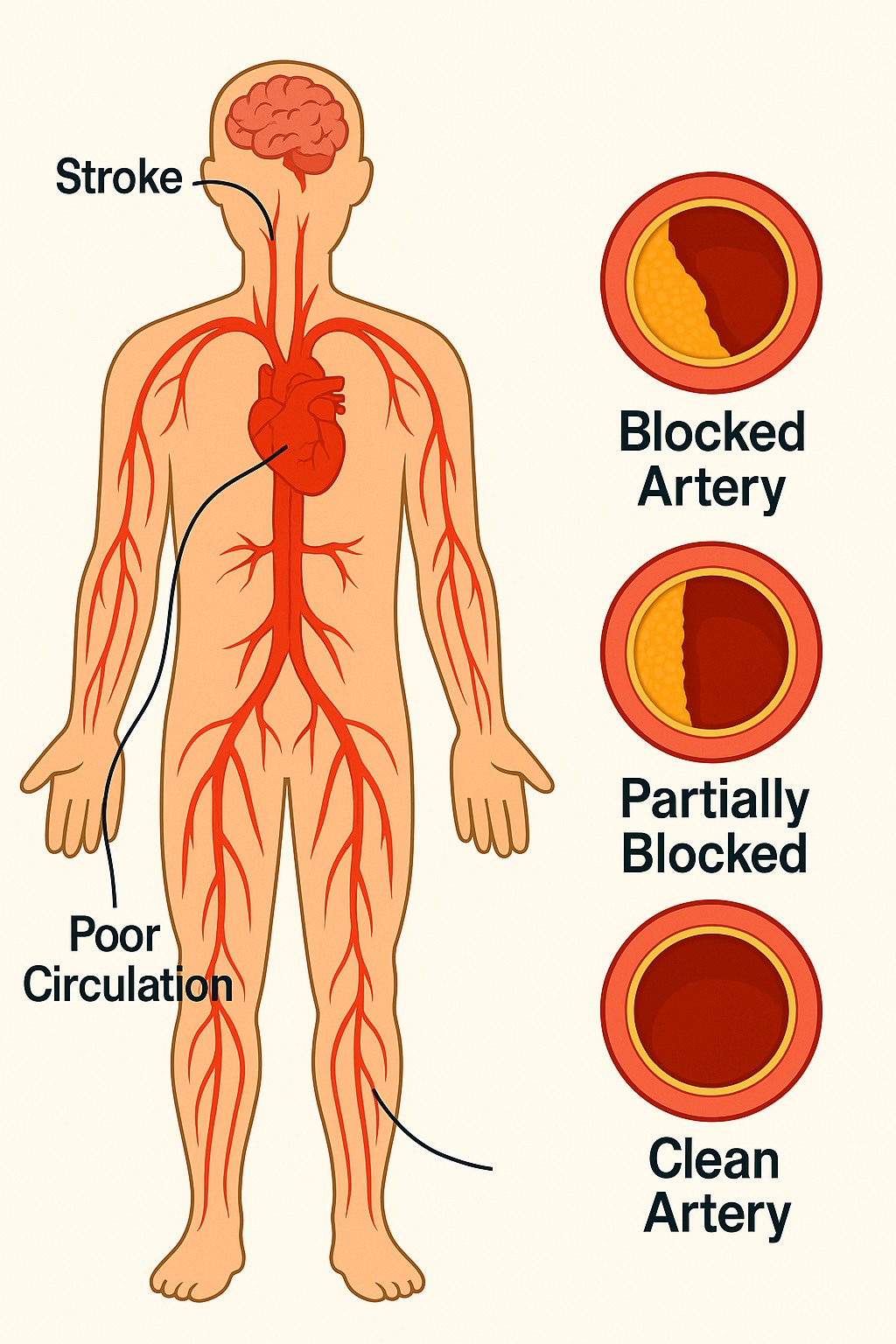
Carotid arteries: When you have clogged arteries in your brain, it is a condition called carotid artery disease. Plaque will block or narrow the carotid arteries, and signs of a stroke may be present. Symptoms include breathing problems, sudden weakness, confusion, severe headaches, loss of consciousness, blurry vision, trouble with speech, paralysis, trouble walking,dizziness, unexplained falls, and loss of coordination or balance.
Coronary arteries: When the arteries in the heart are clogged, it is called coronary heart disease, or CHD. In this case, plaque will block or narrow the coronary arteries when the heart muscle fails to get enough blood. As a result, chest pain, known as angina will occur. It feels like pressure is squeezing your chest, but you may also feel it in your jaw, neck, arms, shoulders, or back. Angina also sometimes feels like indigestion. Emotional stress will also often trigger angina. Other CHD symptoms include heartbeat problems and shortness of breath.
Renal arteries: Chronic kidney disease will develop from clogged renal arteries in the kidneys. Over time, chronic kidney disease can slowly impair kidney function. There are no symptoms early in kidney disease; however, as the condition worsens, it can lead to loss of appetite, nausea, tiredness, concentration problems, numbness or itchiness, and swelling in the feet or hands. Other symptoms include kidney failure and high blood pressure.
Peripheral arteries: Peripheral arterial disease will result from plaque buildup in the arms, legs, and pelvis. These arteries are known as peripheral arteries, and if they are blocked or narrowed, you may experience pain or numbness. On occasion, there are also dangerous infections.
Atherosclerosis is often referred to as the hardening, thickening, and narrowing of the arteries. A thin layer of endothelial cells that help keep the inside of your arteries smooth and toned lines your arteries. This process allows your blood to keep flowing. However, several factors will damage the endothelial cells, including platelet cells, increased homocysteine levels, and free radicals from toxins and antioxidant deficiency. Also, vitamin C deficiency and homocysteine will damage the arteries from the degradation of a gel-like substance called the ground substance. It is found between the cells and helps maintain the integrity of the epithelial cell barrier.
The plaque will accumulate when various substances are unable to migrate out of the atherosclerotic lesion. These substances include fat, calcium, toxic metals, cellular waste, and cholesterol such as LDL (low-density lipoprotein) cholesterol. A material involved in blood clotting called fibrin is also accumulated when arteries are clogged. While the exact cause of clogged arteries is a mystery, evidence shows that atherosclerosis is a complex and slow condition that may begin in childhood and develop as you get older. Certain factors may damage your arteries’ inner layers, including smoking, high blood pressure, type 1 diabetes, type 2 diabetes, and insulin resistance.
