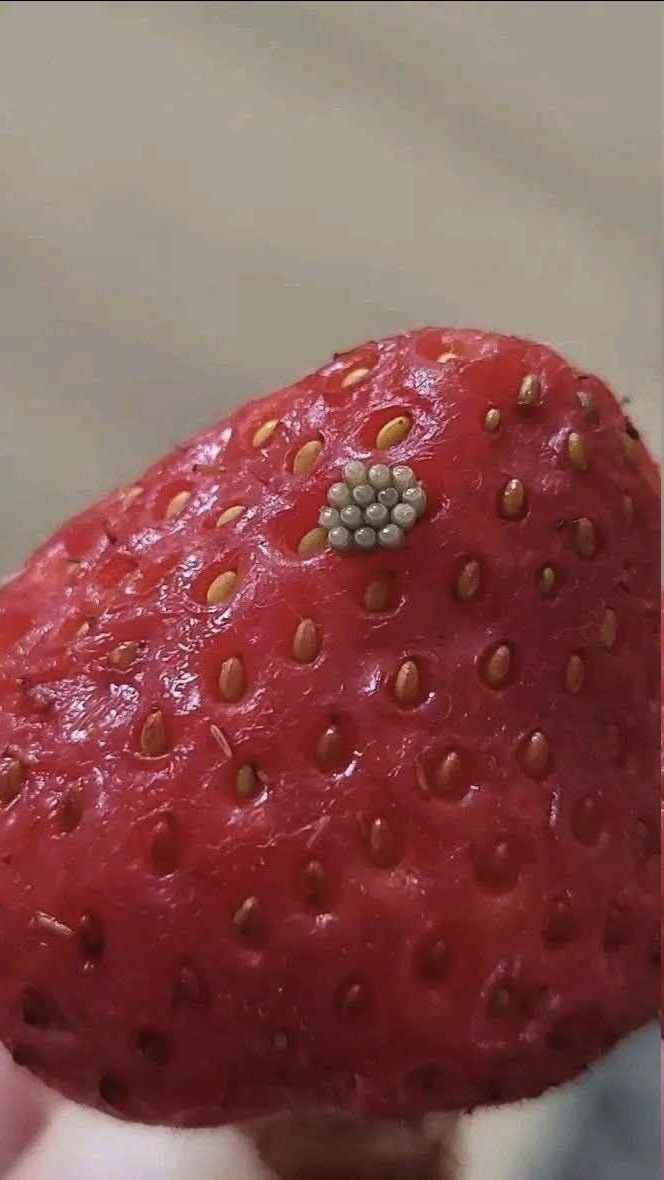
Finding “something moving” in fruit is the kind of moment that makes your stomach drop. You were just trying to wash your berries, and suddenly there are tiny white shapes wriggling out into the water. It’s unsettling, gross, and instantly raises one big question: Is this safe to eat, or should I throw everything away?
Before you panic, it helps to understand what you’re actually seeing—and what it means for the fruit in front of you.
Let’s break it down clearly.
What those white “wiggling things” usually are
In most cases, what people notice after soaking berries in salt water are small insect larvae, often from fruit flies or other tiny insects that lay eggs on ripe fruit.
The most common culprit is the spotted wing drosophila, a type of fruit fly that targets soft fruits like:
Strawberries
Blueberries
Raspberries
Blackberries
The adult flies lay microscopic eggs inside or on the surface of the fruit. When the berries are soaked in salt water, the larvae react to the change in environment and become more visible—sometimes even moving out of the fruit.
That movement is what shocks most people. But it doesn’t automatically mean the fruit is “poisonous” or completely unusable.
Why salt water makes them appear
Salt water doesn’t create insects—it simply reveals what was already there.
When berries are soaked:
The salt irritates or stresses any larvae inside
Oxygen levels change in the water
The larvae may try to escape the fruit
Tiny movements become easier to see
So what looks like something “emerging” is usually just the natural reaction of organisms that were already present before washing.
This is why you might never notice anything unusual when eating berries straight from the container—but see activity once they’re soaked.
Does this mean the berries are unsafe?
This is where most people overreact out of disgust, not actual risk.
In most cases, eating fruit that contains small insect larvae is not dangerous to your health. These insects are not toxic, and they are not known to transmit disease through fruit consumption.
From a food safety standpoint:
The risk is usually low
The issue is mostly quality and preference, not poisoning
Washing or soaking removes most contaminants
However, “safe to eat” doesn’t always mean “pleasant to eat.”
Why appearance matters more than danger
Even if the fruit is technically safe, many people choose to discard it because:
