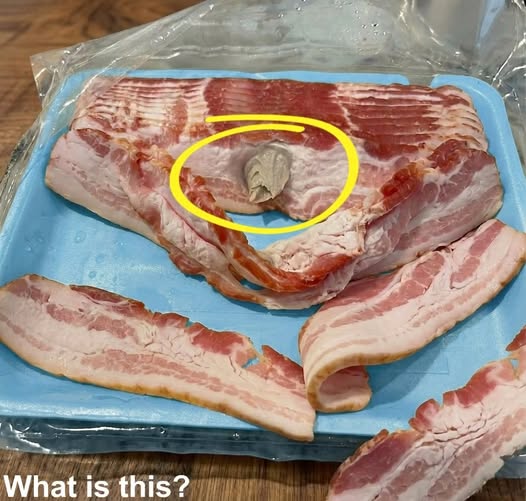
1. A Benign Fat Deposit (Most Common)
Pork belly (where bacon comes from) isn’t uniform. Sometimes, a large pocket of hard fat renders differently than the surrounding meat. When cured and smoked, this fat can turn yellowish, gray, or even slightly greenish due to oxidation or smoke interaction. It might feel waxy or hard to the touch.
Verdict: Safe. Just trim it if the texture bothers you.
2. A Lymph Node or Gland
Pigs have lymph nodes, just like humans. During butchering, most are removed, but occasionally a small one remains embedded in the fat or muscle. These can appear as small, firm, grayish-white or tan nodules.
Verdict: Safe. While it sounds unappetizing, lymph nodes are sterile inside healthy animals. If you spot one, simply cut it out. The rest of the bacon is fine.
3. Blood Spot or Bruise
Occasionally, a small blood vessel bursts during processing, leaving a dark red or purple spot. This is essentially a bruise.
Verdict: Safe. It’s just coagulated blood. It might look alarming, but it’s harmless once cooked.
 Chef’s Tip: If the chunk smells sour, slimy, or has a fuzzy texture, that is spoilage. But if it’s just odd-looking, firm, and smells like normal bacon, it’s likely just a natural part of the pig.
Discover more
beef
Cheese
eggs
 Other Common Kitchen Mysteries (And Whether to Toss Them)
We’ve all been there. You’re prepping dinner, and something looks… off. Here’s how to handle other common food scares.
1. Green Rings Around Hard-Boiled Egg Yolks
The Scare: “Is this mold? Is it rotten?”
The Reality: It’s chemistry. Overcooking eggs causes a reaction between the sulfur in the egg white and the iron in the yolk, forming ferrous sulfide—a harmless green-gray compound.
Verdict: Safe. It might taste slightly sulfurous, but it won’t hurt you. Prevent it by cooling eggs immediately in an ice bath after boiling.
2. White Strings in Chicken Breasts
The Scare: “Are these parasites? Worms?”
The Reality: Those are tendons and connective tissue. Chicken breast muscle fibers are held together by collagen-rich tendons. When cooked, they can become visible and chewy.
Verdict: Safe. Just trim them off if you don’t like the texture.
3. Brown Spots on Bananas
The Scare: “Is it rotting?”
The Reality: As bananas ripen, starches convert to sugars, and the peel develops brown spots (sugar spots). The fruit inside becomes sweeter and softer.
Verdict: Safe (and delicious!). Perfect for baking or smoothies. Only toss if the inside is mushy, black, or smells fermented.
Discover more
Cheese (Cheddar
cheeses
Egg
