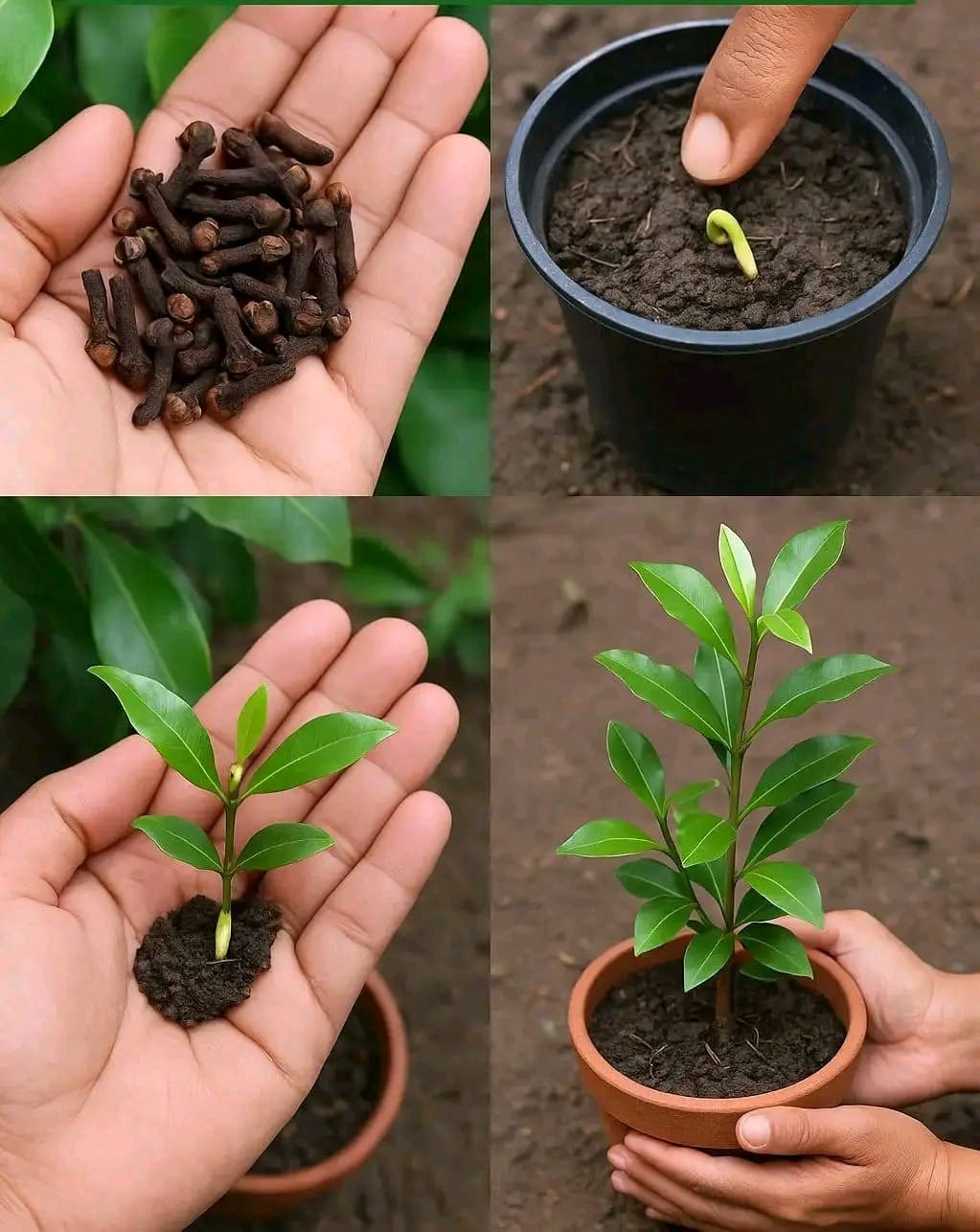
Germination can take anywhere from 3 to 8 weeks depending on conditions .
Tending Young Clove Seedlings
Once seedlings emerge, continue to provide bright but indirect light (4–6 hours daily). Keep the soil consistently moist—use a mist sprayer to avoid disturbing seedlings . Maintain temperatures between 70‑85 °F (21‑29 °C) and humidity around 60–80 % .
When seedlings develop 2–3 true leaves (usually within 6–8 weeks), begin applying a diluted balanced fertilizer (10‑10‑10 NPK) every 4–6 weeks .
Within 6–12 months, once seedlings reach 6–12 inches tall, they can be transplanted into larger containers or, if climate permits, into the garden, maintaining spacing of 15–20 ft (4.5–6 m) between trees .
Ideal Climate, Soil and Environmental Conditions
Clove trees thrive in warm, humid, tropical climates with temperatures between 70–90 °F (21–32 °C), avoiding cold below 50 °F (10 °C) . They prefer rainfall of 60–150 inches per year (150–380 cm) . High humidity (60–80 %) is also key .
Soils should be rich, loamy, well-draining, and slightly acidic to neutral (pH 5.5–7.0). Avoid waterlogged conditions to prevent root rot . Applying organic mulch helps maintain moisture and temperature and suppress weeds .
Suitable planting companions for young trees include banana, mango, jacaranda, or legumes to provide shade or improve soil fertility .
Container Gardening and Indoor Fragrant Clove Trees
If your climate lacks tropical warmth, grow your clove tree in a container—use a pot at least 18 inches in diameter with good drainage . Use similar soil mix as for seedlings and maintain temperature between 65–80 °F (18–27 °C) .
Bring your container indoors before temperatures drop below 50 °F, and use a humidifier or humidity dome to maintain moisture levels . Indoor clove trees can still contribute to natural home fragrance, aroma-therapy benefits, and even yield small harvests over time.
Pests, Diseases, Pruning, and Maintenance
Once your tree is growing, maintain its health with routine pruning to remove dead or damaged branches and improve air circulation . Apply compost or manure in trenches about 2–3 ft from the trunk in early summer and fall; mature trees benefit from substantial organic feeding .
Monitor for pests like scale insects, mealybugs, stem borers, mites, and coconut scale. Use neem oil or horticultural oils as organic treatments . Diseases such as Sumatra disease, eucalyptus canker, and root rot may occur—prevent wounds, use antifungal treatments, and apply antibiotics if necessary .
Harvesting Cloves: From Flower Bud to Home Spice
Clove trees grown from seed typically begin producing flower buds after 4–10 years—often 5–7 years . Mature trees may take 15–20 years to reach peak production .
Harvest each unopened flower bud when it turns from green to pink or pinkish-red, just before the blossom opens. Use sharp pruning shears to avoid damaging the branch .
Dry buds in a warm (80–100 °F), airy space out of direct sunlight for 4–7 days until they darken, harden, and become brittle . Store dried cloves in an airtight container in a cool, dark place to preserve their aroma for 1–2 years .
