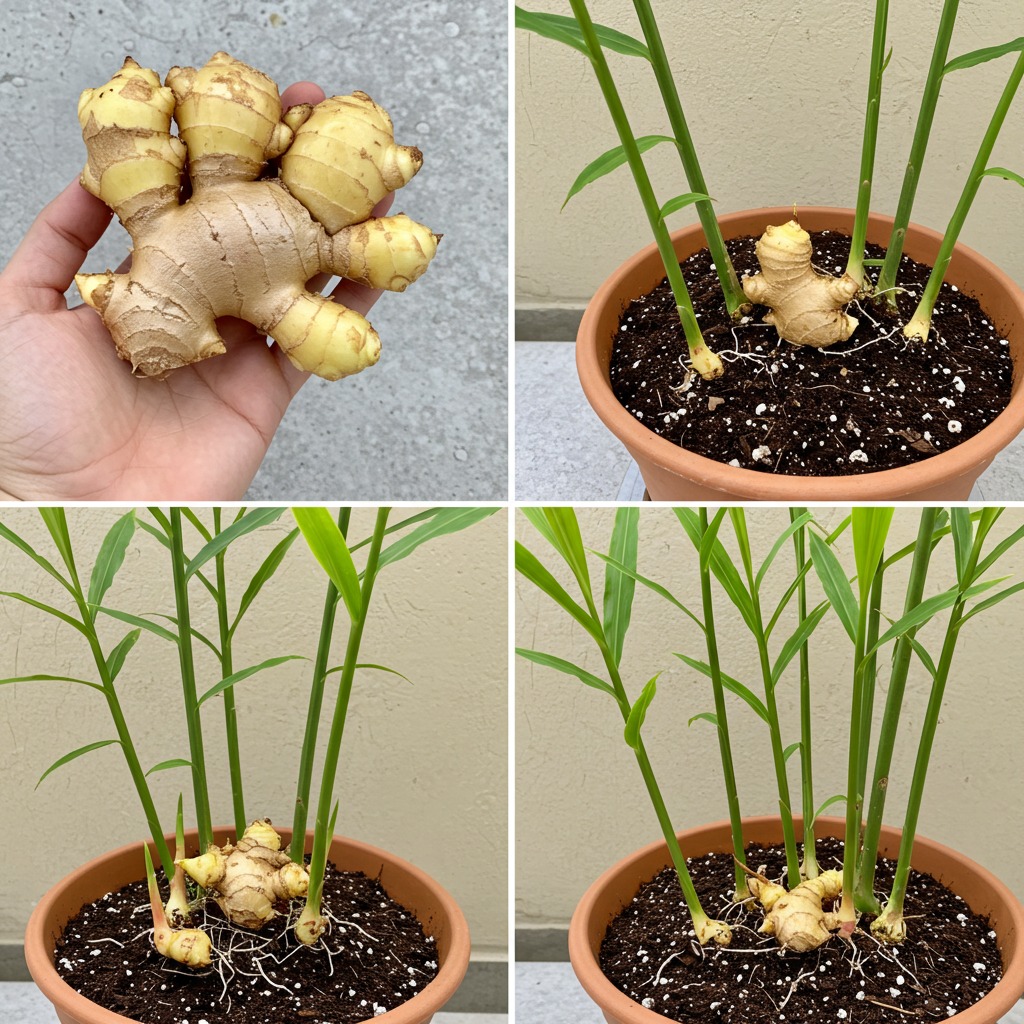
Prepare the Perfect Planting Conditions
Ginger thrives in warm, humid environments with filtered sunlight. Whether planting in containers or directly in the ground, ensure your chosen spot mimics tropical conditions. Indoors near a sunny window or on a shaded patio is ideal for container-grown ginger.
Soil Requirements:
-
-
Loose, loamy, and rich in organic matter
-
Well-draining to avoid rot
-
-
pH level between 5.5 and 6.5
Create a soil mix using compost, coconut coir or peat moss, and a bit of sand or perlite to enhance drainage.
How to Plant Ginger Correctly
Once your rhizomes are ready and your soil is prepared, it’s time to plant.
Steps:
-
-
Cut large rhizomes into smaller pieces, ensuring each has at least one eye.
-
Let the cut pieces air-dry for a day to form a callus. This reduces the risk of rot.
-
Plant each piece 1–2 inches deep, eyes facing upward.
-
Space rhizomes about 8 inches apart if planting multiple.
-
Cover lightly with soil and water gently.
-
Keep the soil consistently moist but never soggy, especially in the early stages of growth.
Provide Ongoing Care Like a Pro
Caring for ginger is relatively low-maintenance, but consistent attention will help you achieve better yields.
Watering:
Water regularly to maintain moist soil. In dry climates or during hot spells, increase watering frequency. Avoid overwatering, which can cause root rot.
Feeding:
Feed your ginger every 3–4 weeks with a liquid organic fertilizer or a compost tea. A fertilizer rich in phosphorus and potassium encourages strong root development.
Mulching:
Add a layer of mulch such as straw or dried leaves. Mulching helps retain moisture, suppress weeds, and maintain even soil temperature.
Sunlight:
Ginger prefers partial shade to filtered light. Too much direct sun can scorch the leaves, so avoid placing it in areas with intense afternoon heat.
Watch for Growth and Troubleshoot Issues
Ginger plants take a few weeks to sprout, so be patient. Once shoots emerge, they’ll slowly develop into lush, green stalks. Healthy plants will reach 2–3 feet in height within a few months.
Common issues:
-
-
Yellowing leaves may indicate overwatering or nutrient deficiency.
-
No sprouting? The rhizome might have been too dry or old.
-
-
Pests like spider mites or aphids can be deterred with neem oil or soapy water sprays.
Inspect your plants regularly to address problems early and ensure robust growth.
Harvest at the Right Time
Ginger is typically ready to harvest in 8–10 months. However, you can start harvesting young ginger (which is tender and less fibrous) after 4–6 months if desired.
Signs it’s time to harvest:
-
-
The leaves begin to yellow and die back.
-
The plant looks mature and full-sized.
-
Use a garden fork or trowel to carefully dig up the rhizomes. Break off what you need and replant a few pieces to start the cycle again.
