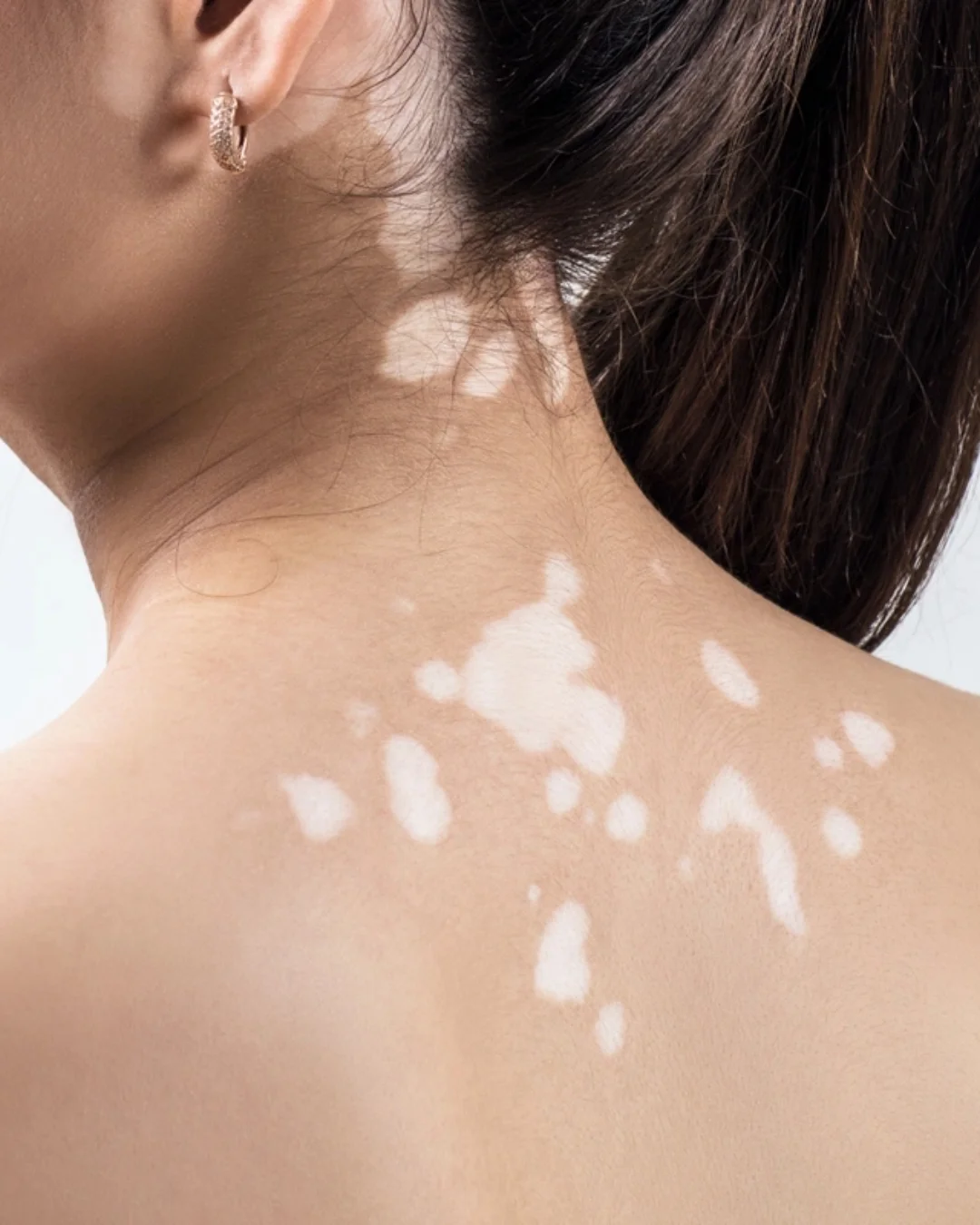
These spots usually appear on the:
-
Chest
-
Upper back
-
Neck
-
Upper arms
-
Face (especially in children and teens)
One key giveaway: the affected areas don’t darken in the sun, making them more noticeable after sun exposure.
Who Is Most at Risk?
Tinea Versicolor thrives in specific environments and body conditions. You’re more likely to develop it if you:
-
Live in a warm, humid climate (for example, tropical regions like Nigeria)
-
Sweat excessively
-
Have oily skin
-
Have a weakened immune system
-
Are a teenager or young adult
Hormonal changes during adolescence increase oil production, which explains why this condition is especially common in younger people.
Symptoms to Watch Out For
Unlike eczema, Tinea Versicolor usually causes minimal inflammation, which can make it harder to recognize.
Typical symptoms include:
-
Discolored skin patches that may be:
-
Slightly itchy
-
Dry or scaly
-
-
Uneven skin tone that becomes more obvious after sun exposure
-
Mild flaking when the skin is scratched
Important note: Itching is usually mild or absent, unlike eczema, which often causes intense itchiness.
