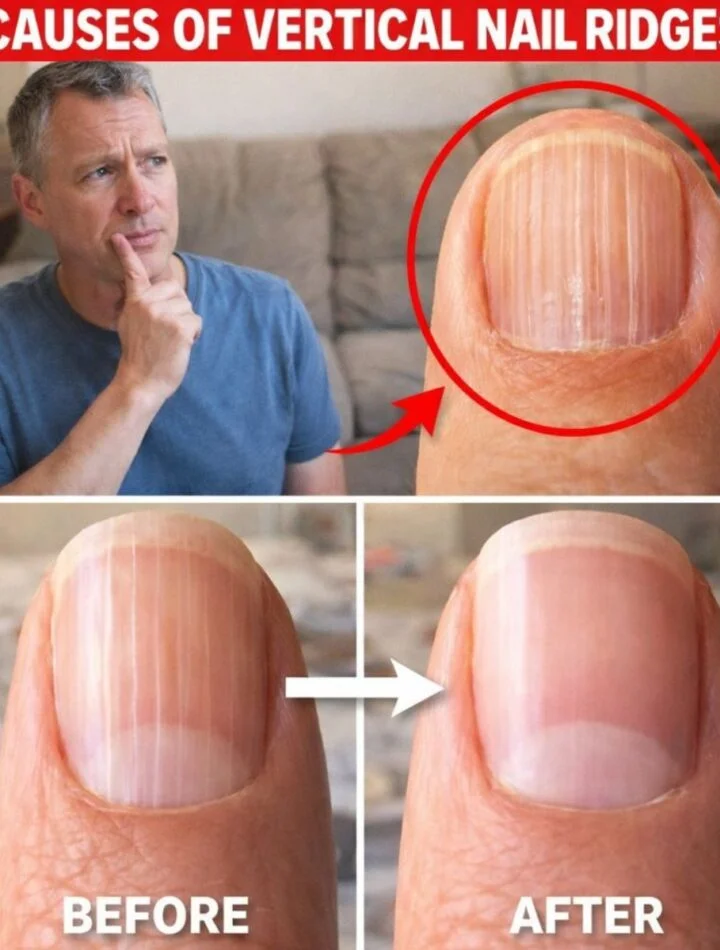
1. Vertical Ridges (Running from Cuticle to Tip)
These faint lengthwise lines are extremely common after age 50 as natural oil production in the nail decreases. Studies suggest up to 50% of adults over 50 have some degree of vertical ridging.
However, when the ridges become deep or pronounced, they have been associated with:
- Iron deficiency (seen in 20–30% of people with anemia)
- B-vitamin shortfalls, especially B12 or folate
- Thyroid imbalances
- Inflammatory conditions like rheumatoid arthritis (present in about 40% of cases)
Quick self-check: Run your fingertip across your nails. Do you feel raised vertical lines? Notice how prominent they are.

2. Horizontal Ridges (Beau’s Lines)
These are deep grooves or indentations running across the nail. They occur when nail growth temporarily stops due to significant physical stress.
Common triggers research links to Beau’s lines include:
- High fever or serious infection
- Major surgery or trauma
- Uncontrolled diabetes
- Severe malnutrition
- Certain medical treatments like chemotherapy
A review in the American Journal of Medicine notes that these lines typically appear 1–2 months after the triggering event, with deeper grooves suggesting greater stress.
3. Nail Pitting (Small Dents or Pits)
Tiny depressions that make the nail surface look like orange peel are called pitting. They happen when the nail matrix becomes inflamed.
Pitting is strongly linked to autoimmune conditions:
- Seen in 50–70% of people with psoriasis
- Present in about 50% of those with alopecia areata (patchy hair loss)
Often, pitting appears years before other symptoms become obvious.

4. Spoon-Shaped Nails (Koilonychia)
When nails become thin and concave—like they could hold a drop of water—this is called koilonychia.
It’s most commonly associated with iron deficiency, but can also appear with:
- Chronic liver disease
- Heart disease
- Certain nutritional shortfalls
5. Terry’s Nails (Mostly White with Pink Tips)
In this pattern, most of the nail appears white, with only a narrow pink band at the tip.
Studies show this change in up to 80% of people with advanced liver cirrhosis and around 40% of those with chronic kidney disease. The white appearance reflects changes in blood flow and protein processing.

Quick Mid-Article Check-In
Take a moment to think:
