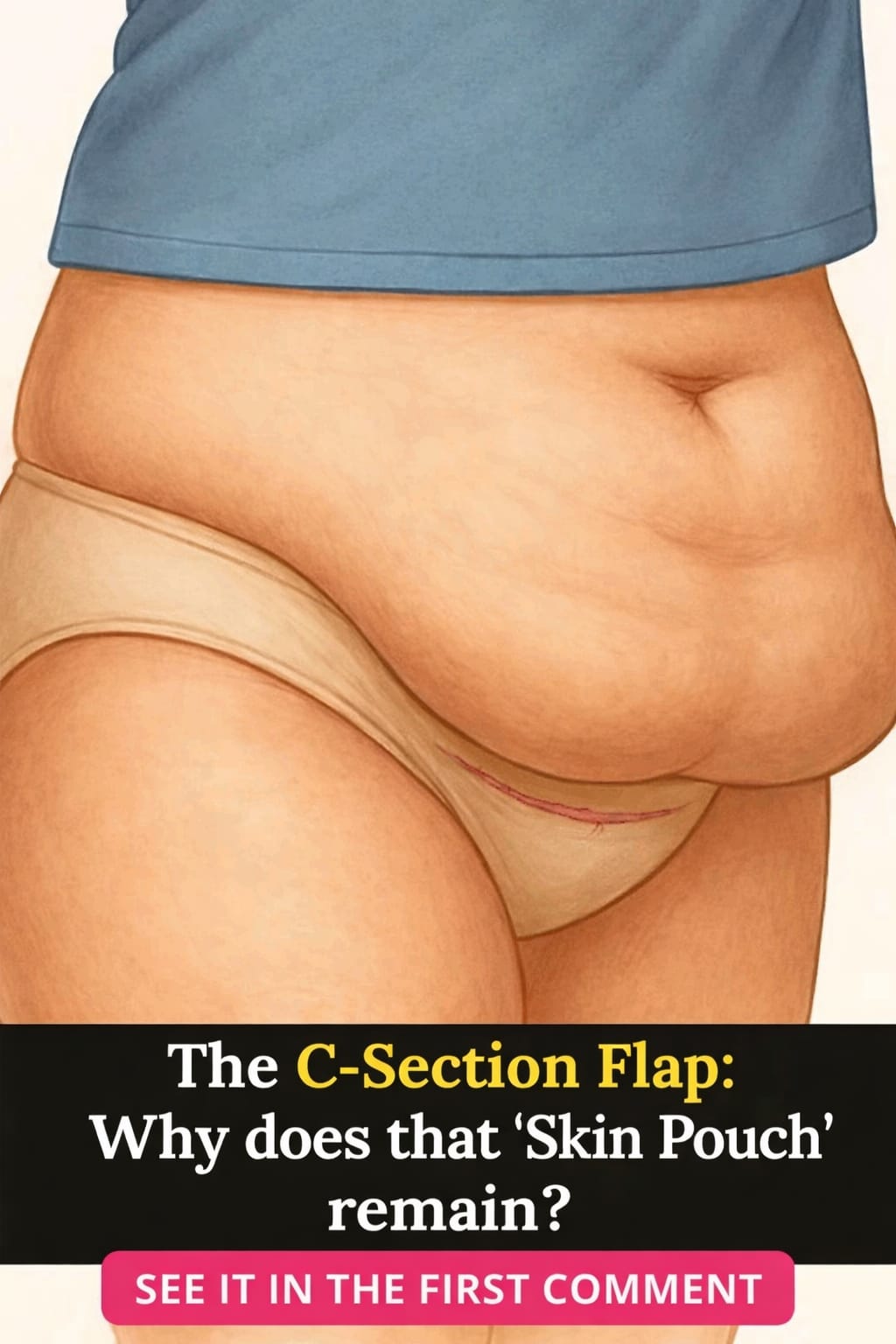
The Cesarean Section Flap: Why That “Bag” of Skin Remains
1. Skin changes due to pregnancy
The skin and subcutaneous tissue stretch for months during pregnancy. After childbirth, they don’t always regain their initial firmness, which makes wrinkles more likely to form.
2. Accumulation of fat in the lower abdomen
This area naturally tends to store fat, especially after hormonal changes related to pregnancy.
A cesarean section involves incision of several layers of tissue; as it heals, small internal retractions can form, causing the skin to droop forward.
4. Fluid retention and the healing process
During the first few weeks and months, the abdomen is more swollen due to postpartum recovery; this can accentuate the appearance of the fold, which will resolve on its own over time.
Skin elasticity and body shape greatly influence whether this “flap” appears or not.
The good news is that there are several ways to improve the appearance of this “flap” of skin. Some are everyday habits, and others are procedures that may be recommended depending on each individual case.
1. Balanced diet and physical activity
Maintaining a healthy weight helps reduce fat in the lower abdominal area. Activities such as walking, deep abdominal exercises, and gentle weight training can help.
2. Core strengthening
Exercises focused on the pelvic floor and deep muscles (such as diaphragmatic breathing and transverse abdominal activation) can improve abdominal firmness.
