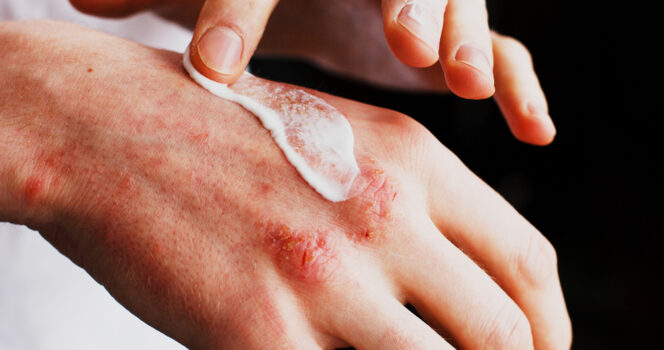
Plaque psoriasis
According to the NPF, this is the most common type of psoriasis, characterized by dry, itchy, raised patches of skin (plaques) covered with scales. These patches can vary in number and typically appear on the elbows, knees, lower back, and scalp. The color of the plaques depends on skin tone and may heal with temporary discoloration, known as post-inflammatory hyperpigmentation, especially on darker skin. Any type of irregularity warrants medical attention.
Key characteristics
Texture: Thick and scaly
Color: Red or pink with a silvery overlay
Itch Factor: Moderate to severe
Guttate psoriasis
Primarily seen in children and young adults, guttate psoriasis often develops after a bacterial infection like strep throat. This type of psoriasis manifests as small, drop-like sores on the trunk, arms, or legs. Unlike plaque psoriasis, guttate spots are thinner and less scaly.
Size: Small, teardrop-shaped spots
Trigger: Infections
Affected areas: Torso, limbs
Inverse psoriasis
Inverse psoriasis loves to hide in the folds of your skin like the groin, buttocks, and under the breasts. Unlike other types, it doesn’t have the signature scaling. Instead, it presents as shiny, smooth, red patches that can worsen with friction or sweating. Fungal infections are a common trigger for this form of psoriasis.
Texture: Smooth and shiny
Location: Skin folds (where friction and sweat occur)
Irritation: Often worsened by sweat and rubbing
Because of its location, inverse psoriasis can be tricky to manage and is prone to fungal infections. Keep the area clean and dry!
Pustular psoriasis
This type is less common but dramatic in its presentation. Pustular psoriasis is characterized by white pustules (blisters filled with non-infectious pus) surrounded by inflamed, red skin. It can appear on specific areas like the hands and feet or spread across the body. We discuss some of the symptoms below.
